

Timeless Nursery Inspiration
Designing a nursery is about more than choosing beautiful furniture. It is about creating a room that feels peaceful during quiet mornings, comforting during long nights, and flexible enough to grow with your child.
A timeless nursery does not depend on a single trend. Instead, it combines soft colors, natural materials, thoughtful storage, warm lighting, and meaningful details. The result should feel calm and personal rather than overly decorated.
Whether you are working with a dedicated nursery or a small corner of your bedroom, these ideas can help you create a space that feels beautiful now and remains useful for years to come.
This post may contain affiliate links. If you purchase through these links, The Atelier Living may earn a small commission at no additional cost to you.
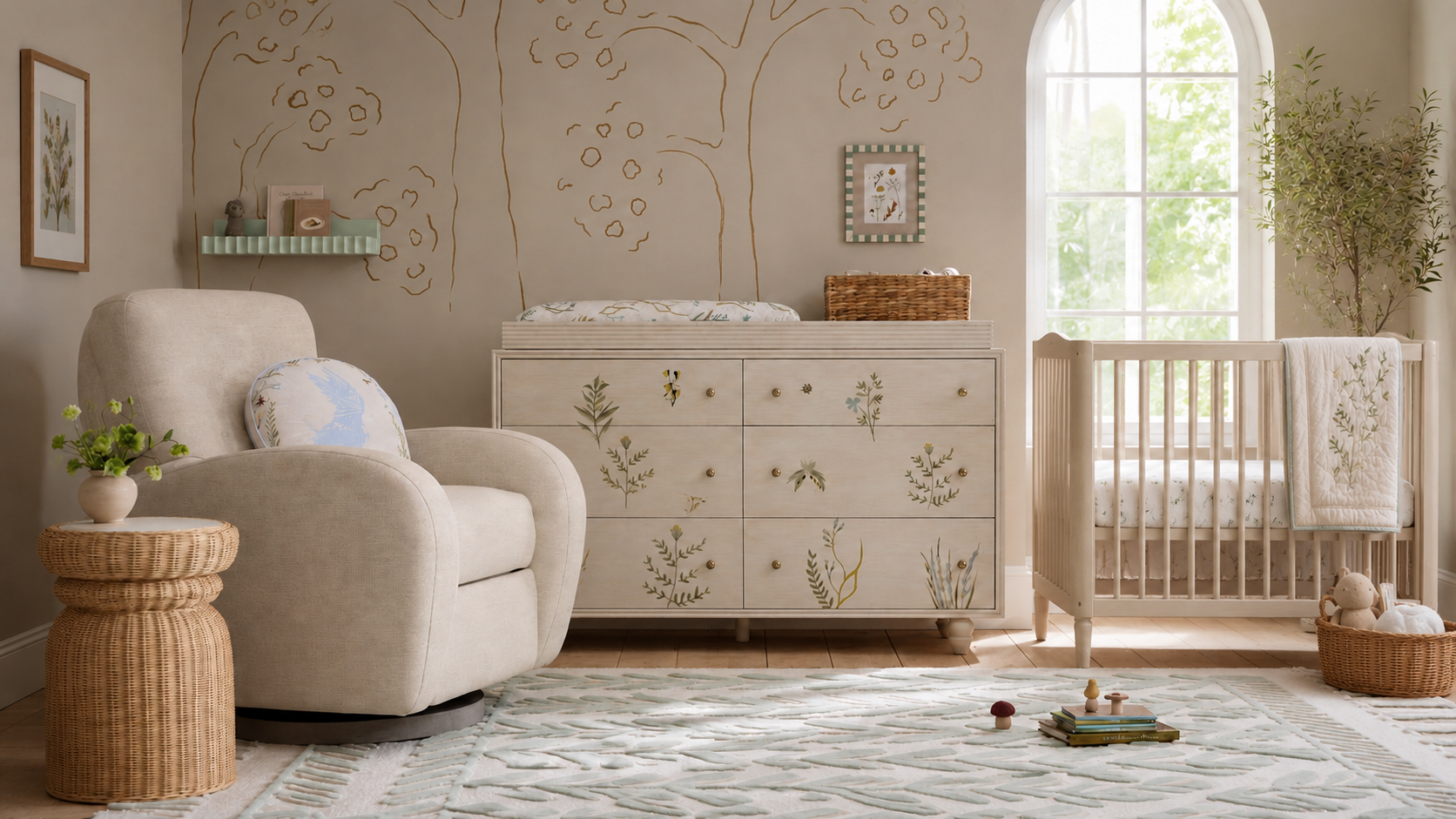
West Elm
Begin With a Nursery Mood Board
Before choosing paint, wallpaper, or furniture, create a simple mood board that captures how you want the nursery to feel.
A mood board helps you see whether your ideas work together before you begin purchasing anything. It also keeps the room from becoming a collection of unrelated pieces.
Start by collecting images that reflect the atmosphere you want. These do not all need to be nursery images. You might include:
A softly colored landscape
A vintage textile
A quiet bedroom interior
A botanical illustration
Natural wood finishes
Linen or cotton fabrics
A favorite children’s book
A meaningful family photograph
Once you have gathered several references, look for repeating elements. You may notice that you are drawn to warm wood, faded blue, small floral patterns, or simple European-inspired furniture.
Try to narrow the mood board to approximately six to ten images. Too many references can make the direction feel less clear.
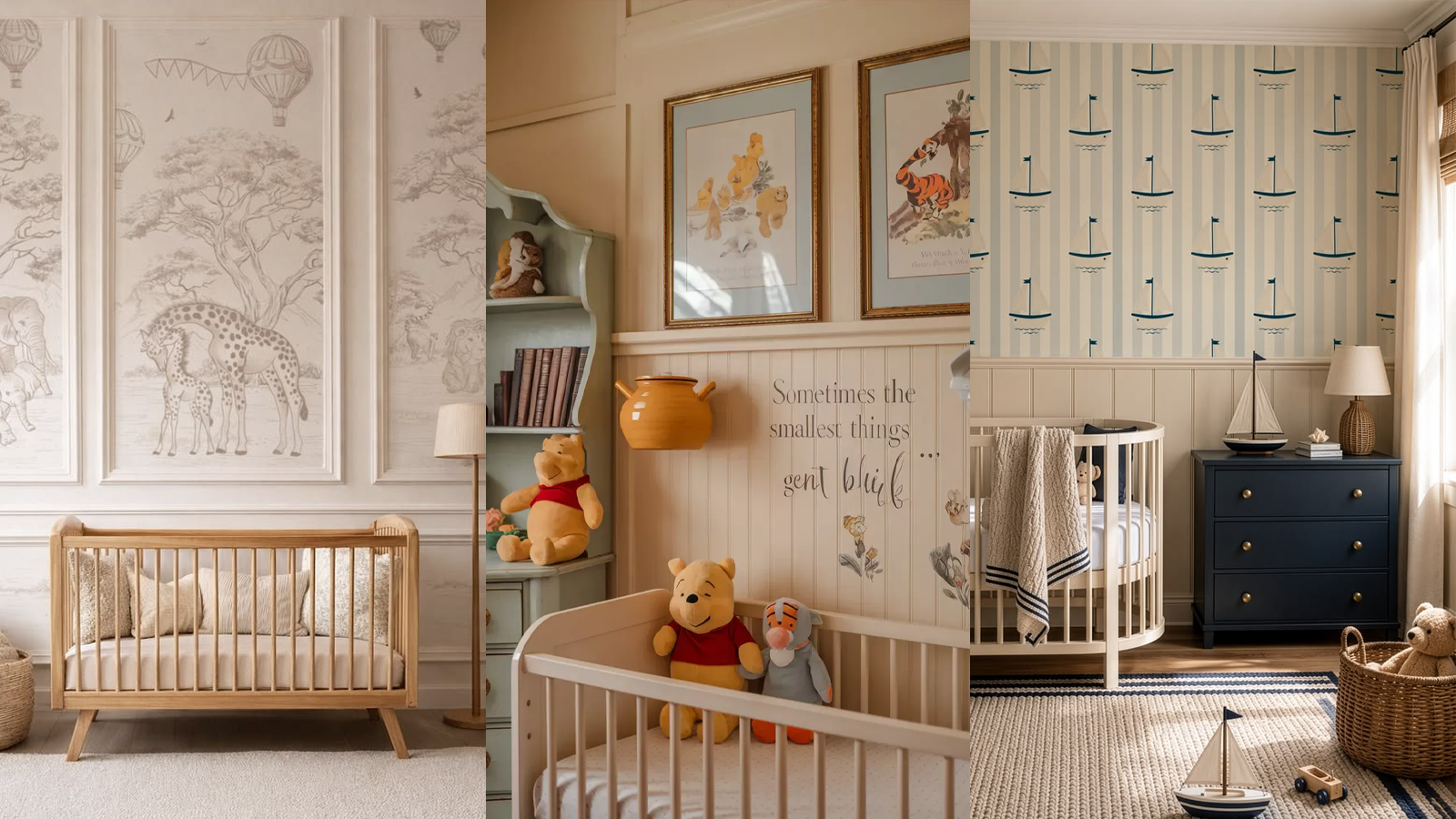
Three Timeless Nursery Mood-Board Directions
Soft and Natural
Combine warm white walls, light oak furniture, woven baskets, linen curtains, and muted sage accents.
This direction works especially well for parents who prefer a calm, minimal room without making it feel cold.
Vintage Storybook
Use a small-scale wallpaper, antique-inspired furniture, framed illustrations, warm brass lighting, and soft dusty colors.
The room should feel collected over time rather than designed around one matching furniture set.
Quiet Coastal
Choose soft blue-gray, cream, faded stripes, light wood, and natural textures.
Avoid obvious nautical decorations. A timeless coastal nursery should feel airy and relaxed rather than themed.
Choose a Calm, Layered Color Palette
A timeless nursery usually begins with a restrained color palette. This does not mean the room must be entirely beige or white. Color can make a nursery feel warm and memorable when it is used thoughtfully.
Choose one main neutral, one supporting color, and one or two smaller accent tones.
Warm Neutral Palette
Soft ivory
Oatmeal
Light oak
Muted camel
Warm white
This palette creates a gentle foundation and works beautifully with natural fibers and traditional furniture.
Muted Botanical Palette
Cream
Soft sage
Dusty olive
Pale clay
Medium walnut
This combination feels connected to nature without relying on a strong botanical theme.
Faded Blue Palette
Warm white
Misty blue
Soft gray
Natural linen
Dark wood accents
Faded blue can feel peaceful and classic, especially when paired with warm materials rather than bright white furniture.
Soft Rose and Clay Palette
Ivory
Muted blush
Dusty rose
Pale terracotta
Warm oak
This approach feels soft without becoming overly sweet. Use blush as an accent rather than covering every surface in pink.
A Helpful Color Rule
Use the quietest color on the largest surfaces, such as walls and curtains. Introduce the supporting color through upholstery, wallpaper, or a rug. Save the deepest tones for smaller details such as frames, lamps, baskets, and artwork.
This creates visual depth while keeping the room peaceful.
Use Wallpaper as a Gentle Backdrop
Wallpaper can add personality to a nursery without requiring many additional decorations.
For a timeless look, choose patterns with a small or medium scale. Delicate florals, botanical drawings, subtle stripes, scattered stars, woodland sketches, and vintage-inspired prints can all work beautifully.
Avoid selecting wallpaper only because it is currently popular. Ask whether you would still enjoy the pattern in a toddler’s room or a young child’s bedroom.
Where to Use Wallpaper
Wallpaper does not need to cover every wall.
You might use it:
Behind the crib
On the upper half of the walls
Inside a nursery nook
Behind built-in shelves
On the ceiling
Inside a closet
On one wall of a shared bedroom
Using wallpaper in a smaller area can create a focal point while keeping the rest of the room visually calm.
How to Balance a Patterned Wall
When the wallpaper is detailed, keep nearby furniture and textiles simple. A natural wood crib, solid curtains, and a quiet rug will allow the pattern to feel intentional rather than overwhelming.
When the wallpaper is very subtle, you can introduce more texture through upholstery, blankets, baskets, and artwork.
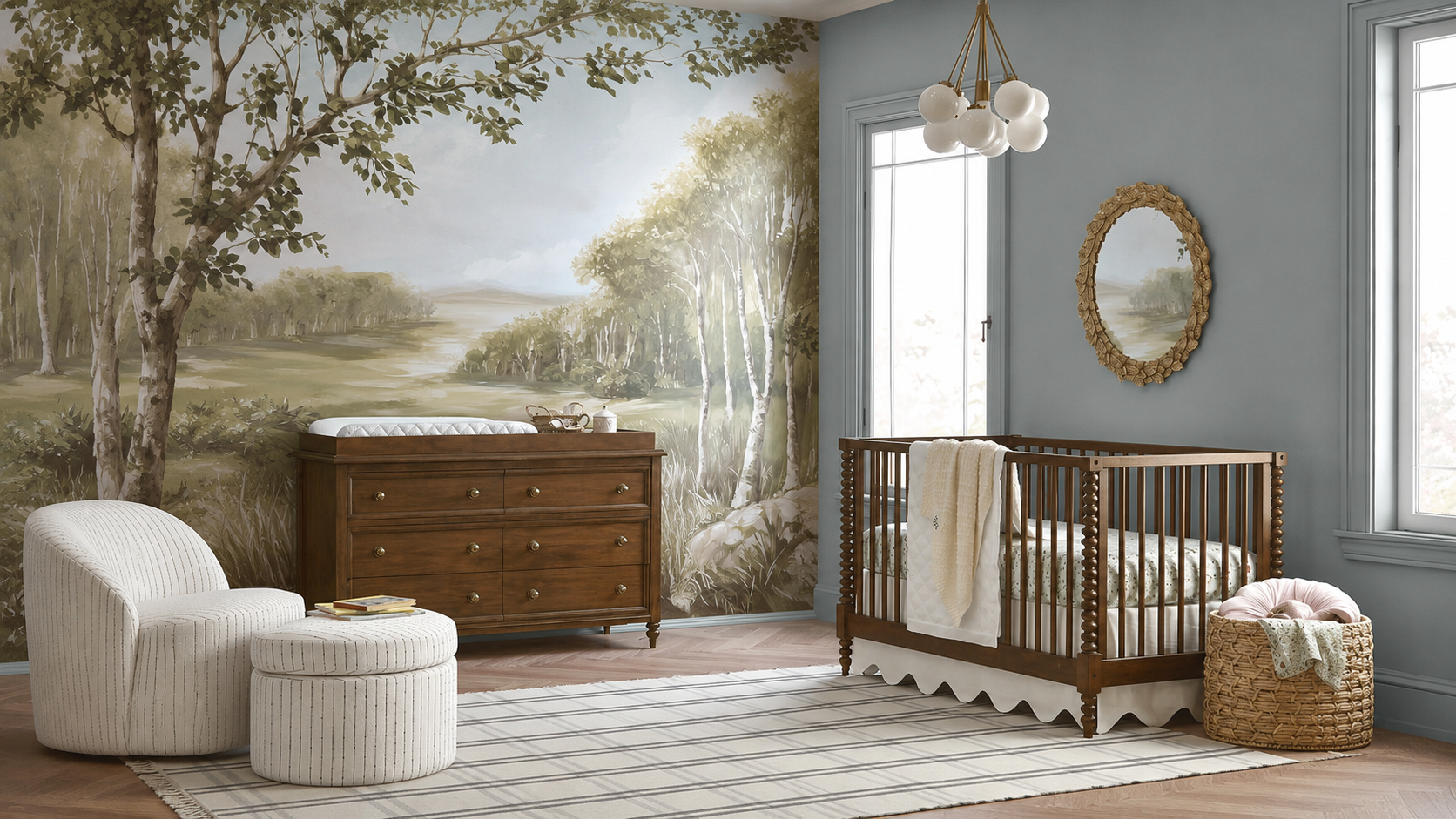
Pottery Barn Kids
Choose Furniture That Can Grow With the Room
A timeless nursery does not need to be filled with furniture designed only for babies.
Choose pieces that can continue to serve the room as your child grows. A classic dresser can become a changing station now and clothing storage later. A comfortable armchair can eventually move into a bedroom, reading area, or living room.
The most important nursery furniture usually includes:
A safe crib or mini crib
A sturdy dresser
A comfortable chair
A small side table
Flexible storage
For smaller rooms, read our guide to Baby Essentials for Small Spaces.
Mix Rather Than Match
A full matching nursery set can sometimes make a room feel temporary or overly coordinated.
Instead, combine furniture with related but not identical finishes. A natural oak crib can work with a painted cream dresser. A walnut side table can complement a light upholstered chair.
The pieces should share a similar visual mood, but they do not need to come from the same collection.
Keep the Shapes Simple
Furniture with clean lines, softly rounded corners, and traditional proportions tends to age more gracefully than highly themed designs.
Look for details such as:
Spindle crib rails
Simple drawer fronts
Turned wood legs
Woven cane panels
Linen or cotton upholstery
Natural wood grain
These elements add character without making the room feel tied to a specific year or trend.
Layer Lighting for a Softer Atmosphere
Nursery lighting should support several different moments: getting dressed in the morning, reading in the afternoon, feeding at night, and settling down before sleep.
A single bright ceiling light rarely creates the right atmosphere for all of these routines.
Instead, combine several lighting sources.
Ambient Lighting
This is the general light in the room, often provided by a ceiling fixture.
Choose a design that feels soft and visually light. A linen shade, milk-glass fixture, simple pendant, or understated chandelier can add warmth without dominating the room.
Task Lighting
Place a floor lamp or table lamp near the feeding chair or reading corner. This creates enough light for feeding and reading without illuminating the entire room.
Low Evening Light
A small dimmable lamp or gentle night-light can make nighttime routines easier.
Warm, low lighting helps preserve the room’s calm atmosphere and is less disruptive than switching on a bright ceiling light.
Treat Lighting as Decoration
A thoughtfully chosen lamp can act like a small piece of sculpture. Consider ceramic bases, pleated shades, aged brass, simple wood, or softly colored glass.
Keep cords secured and place lamps and fixtures where they cannot be reached by the child as the room evolves.
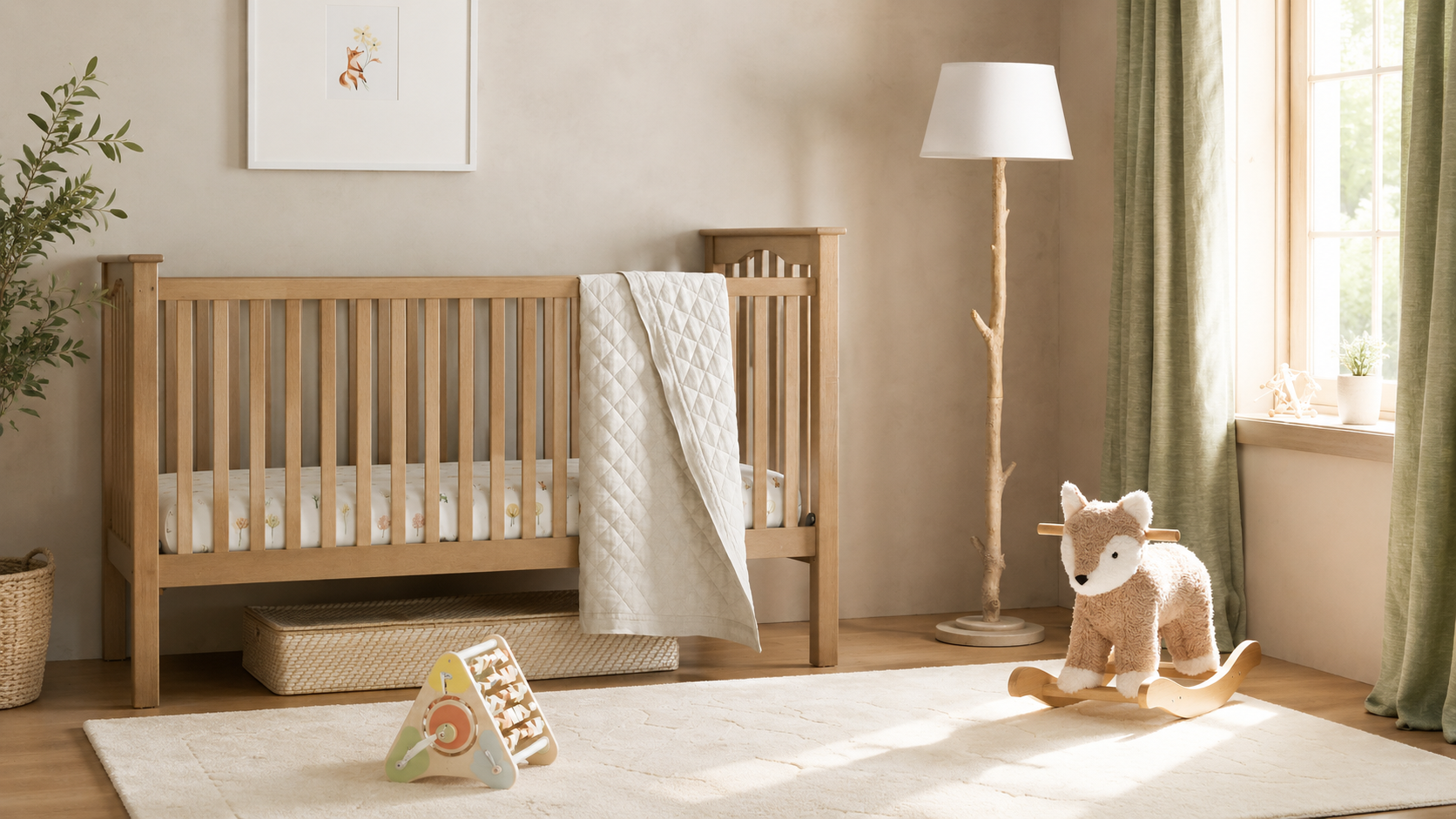
Pottery Barn kids
Make Storage Feel Like Part of the Design
Storage is essential in a nursery, but it does not need to make the room feel utilitarian.
The most successful storage combines closed spaces for visual calm with a small amount of open storage for frequently used or beautiful items.
Closed Storage
Use dresser drawers, cabinets, lidded baskets, and closet bins for:
Extra diapers
Larger-size clothing
Feeding supplies
Bath products
Backup bedding
Toys not currently in use
Closed storage helps the room feel restful by reducing visual clutter.
Open Storage
Use shelves and baskets for a carefully edited selection of:
Board books
Folded blankets
A small toy collection
Framed artwork
Keepsakes
Everyday diapering items
Open shelves should not hold every item the baby owns. Leave breathing room between objects so the display feels intentional.
Use Baskets With Restraint
Woven baskets add warmth and texture, but too many can make the room feel busy.
Choose a few in coordinating materials and assign each one a clear purpose. One may hold blankets, another toys, and another laundry.
For a smaller nursery, vertical wall storage can be especially helpful. Narrow shelves, book ledges, and peg rails keep useful items accessible without using additional floor space.
Soften the Room With Window Treatments
Window treatments can completely change how a nursery feels. They add softness, improve light control, and make the room feel finished.
For a timeless look, use full-length curtains rather than very short panels. Hang them slightly above and wider than the window frame to make the window appear larger.
Curtain Materials
Linen and cotton curtains create a relaxed, natural look. A subtle stripe or small woven texture can add interest without becoming a strong design feature.
Choose:
Warm white linen
Natural flax
Soft beige
Pale blue-gray
Muted sage
Subtle ticking stripes
Layer Curtains With a Shade
A woven shade, Roman shade, or blackout roller shade can provide practical light control, while curtain panels add softness.
This layered approach makes the room work well during both daytime naps and bright mornings.
Follow all installation and child-safety guidance, particularly around curtain cords and furniture placement.
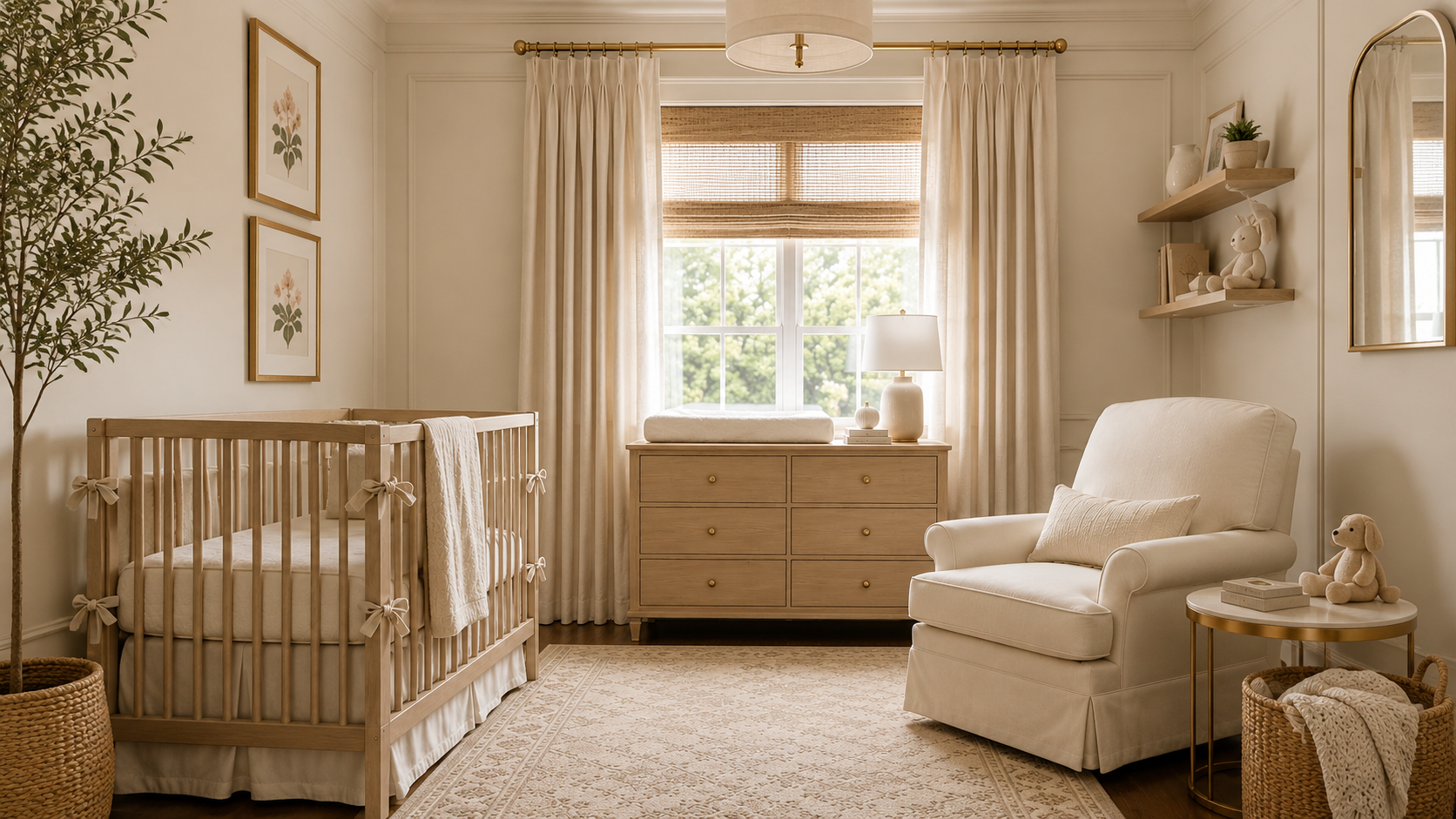
Create a Reading Corner That Grows With Your Child
A nursery reading corner can begin as a comfortable place for feeding and bedtime stories, then become a space your child uses independently.
You do not need a large area. A chair, small shelf, soft rug, and a few books can be enough.
Begin With a Comfortable Chair
Choose a chair that provides support and feels comfortable during longer sitting periods. A glider can be useful, but a classic upholstered armchair can remain part of the room long after the baby stage.
Place a small table nearby for water, a lamp, and a book.
Display Books at an Accessible Height
Picture ledges and low shelves allow book covers to become part of the room’s decoration. As your child grows, the low height also makes it easier for them to choose books independently.
Rotate the selection rather than displaying every book at once.
Add Softness
A washable rug, floor cushion, or small upholstered ottoman can make the corner feel inviting.
Keep the palette connected to the rest of the room. The reading area should feel like a natural extension of the nursery rather than a separate theme.
Add One Personal Detail
A framed family photograph, handwritten quote, heirloom toy, or illustration from a favorite story can make the reading corner feel meaningful.
Explore more ideas through our Nursery Inspiration and Montessori Toys sections.
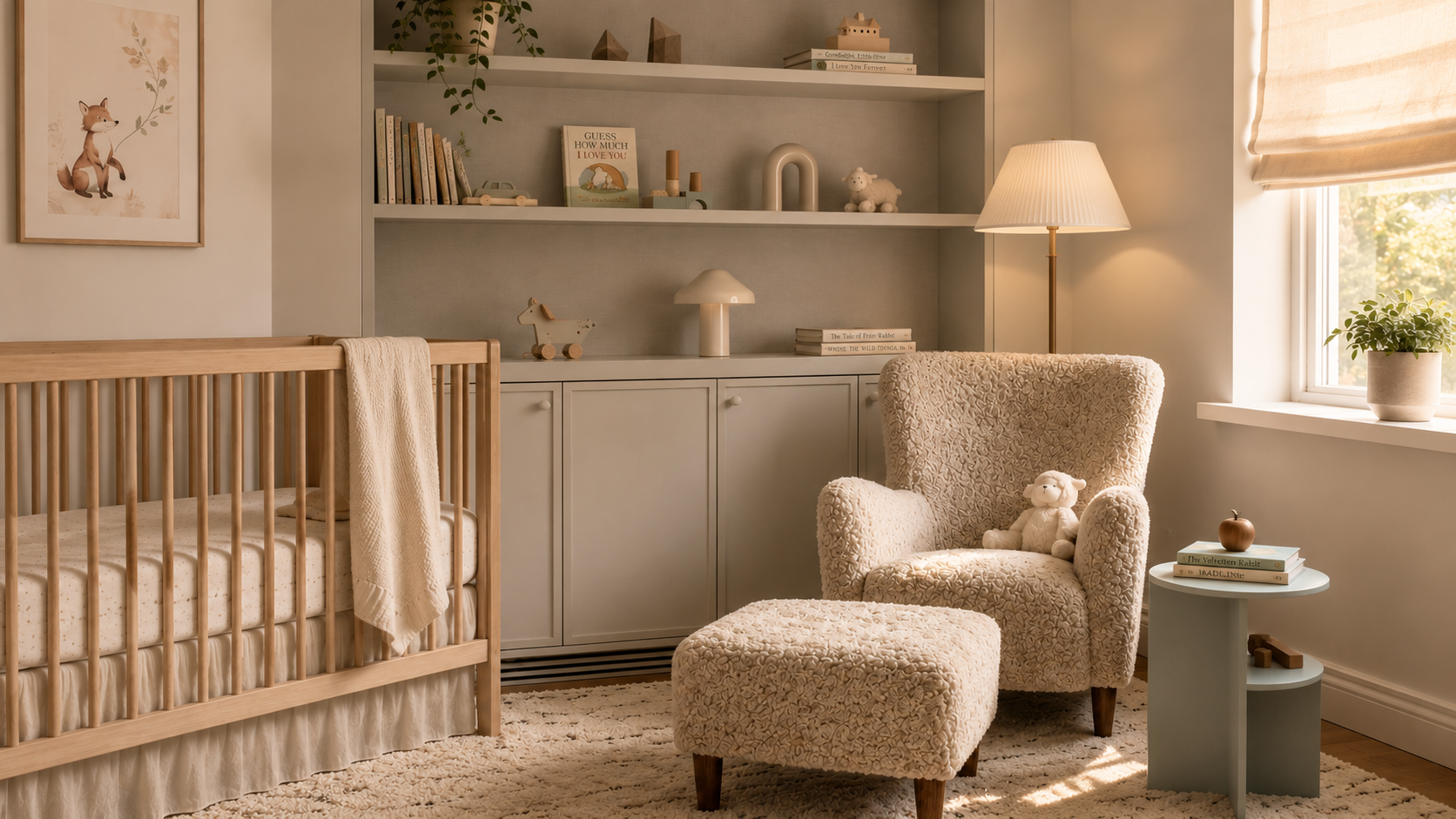
Add Character Through Meaningful Details
A timeless nursery should feel personal, not generic.
Instead of filling the walls with many small decorations, choose a few details that tell a story.
Consider:
A framed family photograph
Vintage-style botanical artwork
A handmade textile
A special children’s book
A small ceramic lamp
An heirloom object displayed out of reach
A monogrammed blanket
Artwork inspired by the family’s culture or travels
These details often become more meaningful than decorations selected only to match a nursery theme.
Try to leave some areas unfinished. The room will naturally gain personality as photographs, books, artwork, and keepsakes are added over time.
How to Keep the Nursery From Feeling Too Themed
Themes can provide a starting point, but they are most successful when interpreted subtly.
For example, instead of creating an obvious woodland nursery with animal images on every surface, try:
Botanical wallpaper
Natural wood furniture
One framed animal illustration
A wool rug
A few forest-inspired colors
Instead of a strong coastal theme, use:
Soft blue-gray walls
Linen curtains
Woven textures
A faded stripe
One quiet seascape
The room will feel more sophisticated when the inspiration is expressed through color, texture, and mood rather than repeated symbols.
A Simple Formula for a Timeless Nursery
Start with a calm wall color or subtle wallpaper. Add furniture in natural wood or a soft painted finish. Introduce one comfortable upholstered piece, warm layered lighting, and practical storage.
Then bring in personality through curtains, books, artwork, and a few meaningful objects.
The room does not need to be completed all at once. In fact, a nursery often feels more timeless when it develops gradually.
Choose the essential pieces first and allow the decorative details to follow.
For practical newborn products to support the space, read 15 Newborn Essentials You’ll Actually Use.
Final Thoughts
A timeless nursery is not defined by a particular color, style, or furniture collection. It is a room that feels calm, comfortable, and personal.
By beginning with a clear mood board, choosing a layered color palette, and selecting furniture that can grow with the room, you create a strong foundation. Wallpaper, lighting, storage, window treatments, and a thoughtful reading corner can then add warmth and character.
The goal is not to create a perfect room before the baby arrives. It is to create a peaceful setting for everyday family life—one that can change naturally as your child grows.