

Baby Essentials for Small Spaces
By Narine Avanesyan · Updated July 28, 2026 · 18-minute read
This article contains affiliate links. As an Amazon Associate, The Atelier Living earns from qualifying purchases.
Creating a comfortable home for a new baby does not require a large nursery or an extra room. With a few compact, thoughtfully selected products, even a small apartment, shared bedroom, or cozy nursery corner can support the baby’s daily routines without feeling crowded.
The key is to choose items that are appropriately sized, easy to move, simple to store, and useful beyond the newborn stage. Instead of trying to fit every traditional nursery product into your home, focus on the routines that happen most often: sleeping, changing, feeding, organizing, and leaving the house.
This guide covers the most useful baby essentials for small spaces, including mini cribs, compact strollers, changing stations, storage solutions, and travel products that help keep everyday life organized.
1. Choose a Mini Crib Instead of a Full-Size Crib
A mini crib can be one of the most valuable purchases for a small nursery, shared bedroom, or compact apartment. It provides a dedicated sleep space while taking up noticeably less floor space than a traditional full-size crib.
Many mini cribs have slim proportions that make them easier to place beside a bed, along a shorter wall, or inside a nursery nook. Folding frames, wheels, adjustable mattress heights, and convertible features can make certain models even more useful as the baby grows.
When comparing mini cribs, look for a stable frame, a firm and properly fitted mattress, adjustable mattress positions, secure wheels when included, compact exterior dimensions, and fitted sheets made specifically for the mattress.
Measure the room before ordering, including enough clearance to walk around the crib and open nearby drawers, doors, or closets.
The Atelier Living recommendation: Choose a simple wood or painted mini crib in white, natural oak, walnut, or warm gray. Clean lines and minimal detailing will help the nursery feel more open and visually calm.
A mini crib can also coordinate beautifully with the products featured in our guide to 15 Newborn Essentials You’ll Actually Use.
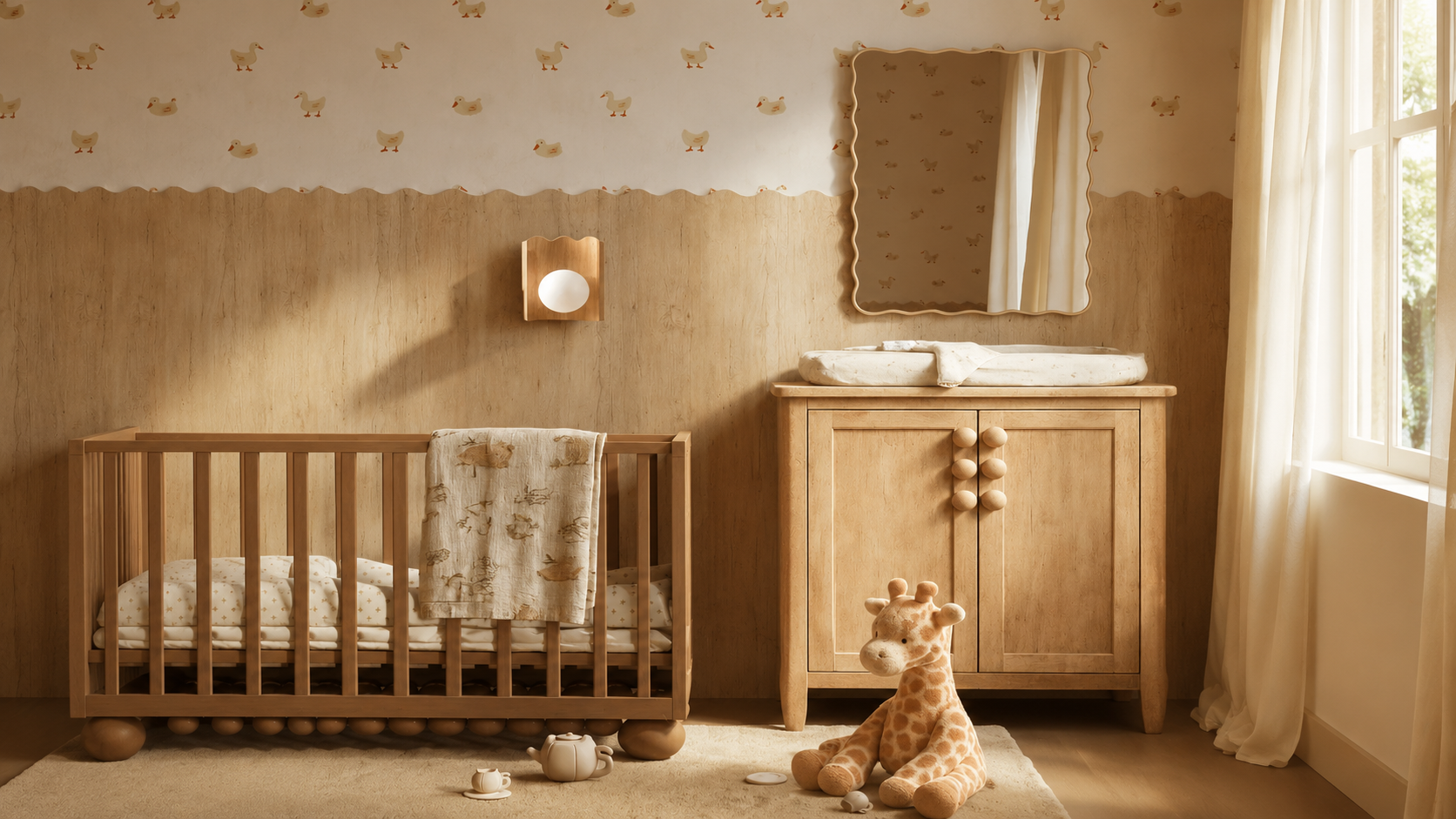
Featured Pick: Babyletto Rolli 9-in-1 Convertible All-Stages® Crib
The Babyletto Rolli in Honey begins as a portable bassinet and converts into a standard crib, toddler bed, daybed, and junior bed. Optional kits expand it to nine stages. It is GREENGUARD Gold Certified and includes locking wheels, adjustable mattress heights, and a bassinet pad.
Best for: Families wanting one stylish sleep system that grows with their child.
Why it stands out: Its warm wood finish, clean lines, and portable bassinet stage work beautifully in small or shared spaces.
Consider: It eventually becomes a full-size crib, so measure your room and confirm which conversion kits, mattresses, and pads are included.
2. Use a Bassinet Only When It Fits Your Routine
A bedside bassinet can be helpful during the early newborn stage, but families living in smaller homes may not need both a bassinet and a crib.
Before purchasing one, decide where it will be placed, whether you need to move it between rooms, and how long you realistically expect to use it. A lightweight bassinet may be practical for keeping the baby close during the first months. However, a mini crib positioned beside the bed may provide a longer-lasting solution without adding another piece of furniture.
For a small space, look for a bassinet with a narrow footprint, breathable sides, a firm and flat sleep surface, washable materials, and a lightweight frame or secure wheels. Avoid oversized bases, bulky storage compartments, and unnecessary attachments that reduce walking space.
Small-space tip: Choose either a compact bassinet or a mini crib as the primary newborn sleep space rather than automatically purchasing both.
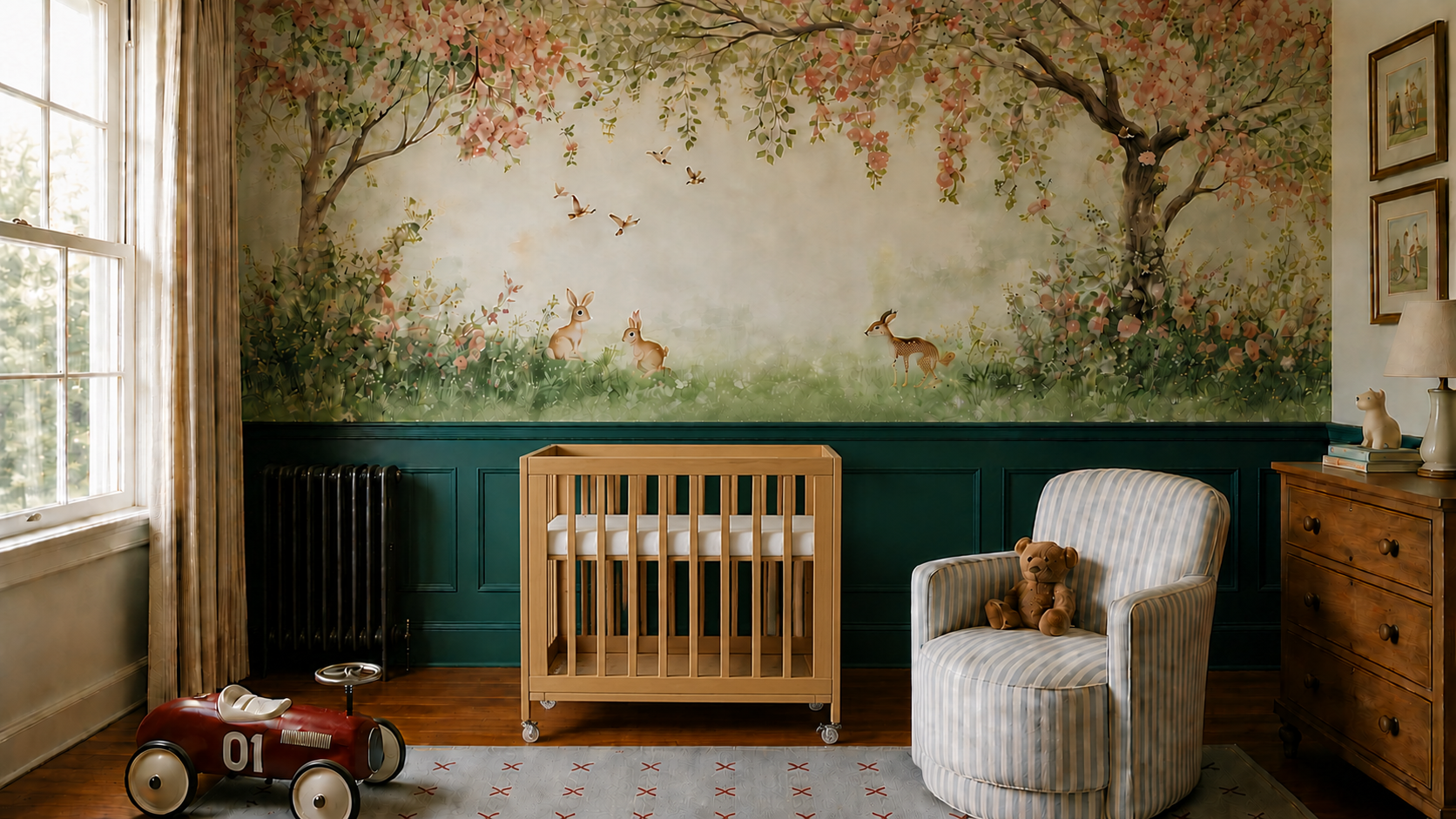
Featured Pick: Maxi-Cosi Starling Onyx Heritage Smart Bassinet with CryAssist
The Maxi-Cosi Starling Smart Bassinet in Natural Heritage is designed for families who want a modern bedside sleep space with built-in smart features. Its dark neutral finish gives it a refined appearance that can coordinate with contemporary bedrooms and nurseries.
Best for: Parents who want a dedicated newborn bassinet with technology-focused features and a polished, modern design.
Why it stands out: The bassinet offers a more elevated alternative to a basic portable model. The CryAssist feature may appeal to parents interested in additional monitoring or responsive technology during the early newborn stage.
Consider: Confirm the bassinet’s assembled dimensions before purchasing, especially if it will be placed beside the bed. Review the manufacturer’s current description of CryAssist, including whether an app, Wi-Fi connection, subscription, or separate setup is required. Also check the included mattress, washable components, age and weight limits, and the manufacturer’s instructions for discontinuing use.
For safe sleep, place the baby on their back on the firm, flat mattress provided for the bassinet. Keep the sleep space free of pillows, padded liners, positioners, loose blankets, toys, and added mattresses.
3. Choose a Stroller That Folds Easily and Fits Your Routine
A stroller can quickly take over an entryway, hallway, or car trunk, so families living in smaller homes should pay close attention to both its open and folded dimensions.
The easiest stroller to live with is one that folds without a complicated process, fits inside your usual storage area, and feels manageable to lift into the car. Features such as a useful storage basket, adjustable seating, infant car-seat compatibility, and durable wheels can make an everyday stroller more practical over time.
When comparing strollers, consider:
Folding process and folded dimensions
Overall weight
Width through doors and elevators
Storage-basket capacity
Infant car-seat or bassinet compatibility
Seat adjustability
Space required for adapters and accessories
The Atelier Living recommendation: Prioritize everyday practicality over appearance alone. Measure your entryway, closet, elevator, and car trunk before purchasing, and make sure you can comfortably fold and lift the stroller yourself.
Explore more portable products in our Baby Travel Essentials guide.
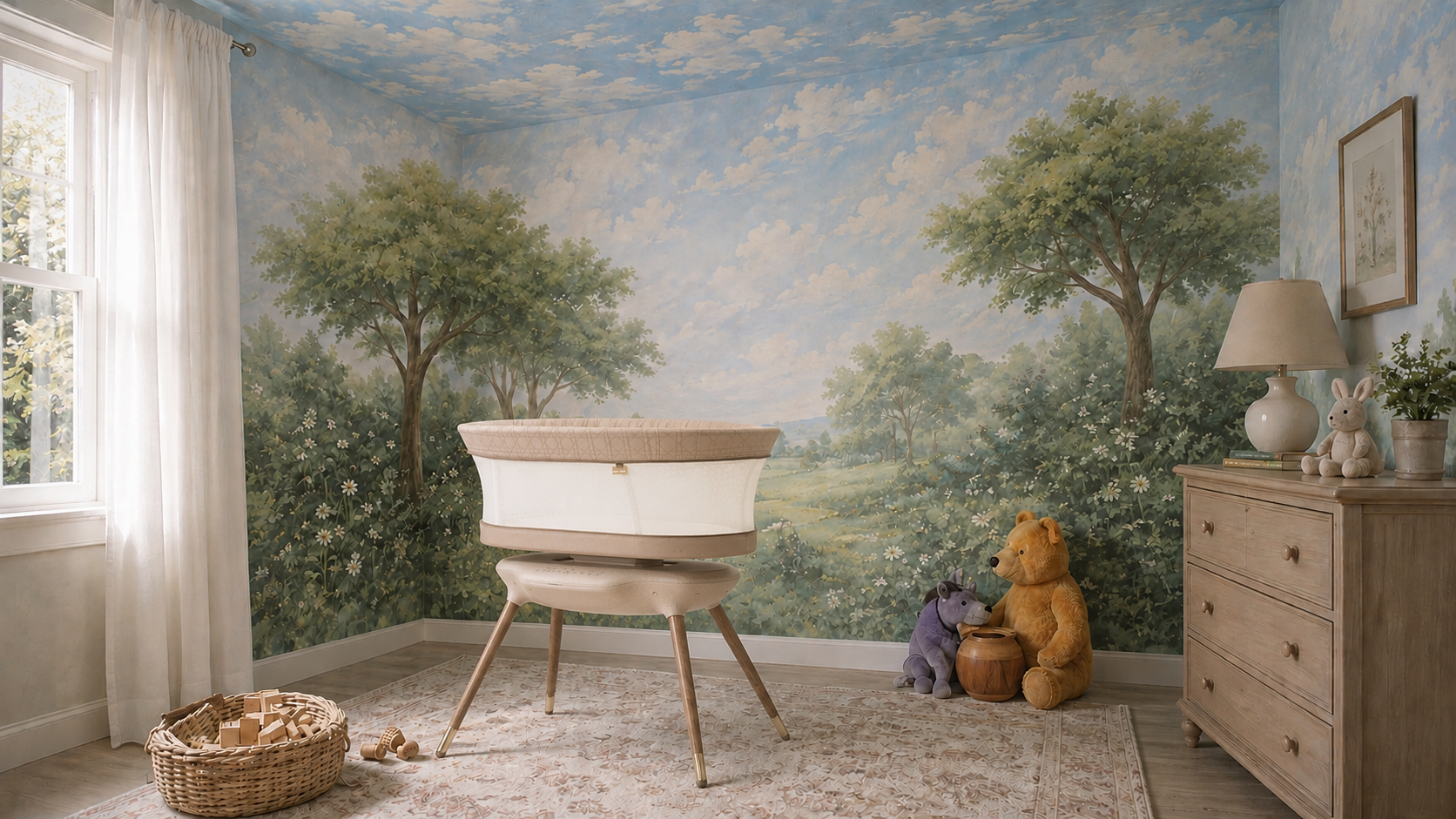
Featured Pick: CYBEX Balios S Lux Stroller — Almond Beige
The CYBEX Balios S Lux Stroller in Almond Beige is a polished everyday stroller designed for walks, appointments, errands, and family outings. Its warm neutral finish gives it an elevated appearance that coordinates beautifully with modern baby accessories and nursery essentials.
Best for: Families looking for a premium single stroller that balances everyday comfort, storage, and refined design.
Why it stands out: The Balios S Lux offers a more streamlined choice than a large modular double stroller, making it better suited to families who currently need seating for one child. Its neutral Almond Beige color also gives the stroller a timeless look that can transition easily between city walks, travel, and daily errands.
Consider: The Balios S Lux is a full-featured everyday stroller rather than an ultralight travel stroller. Confirm its current weight, folded dimensions, infant car-seat compatibility, adapter requirements, included accessories, and approved newborn configurations before purchasing. Measure your trunk and storage area carefully to make sure it fits your space and routine.
4. Turn a Dresser Into a Changing and Storage Station
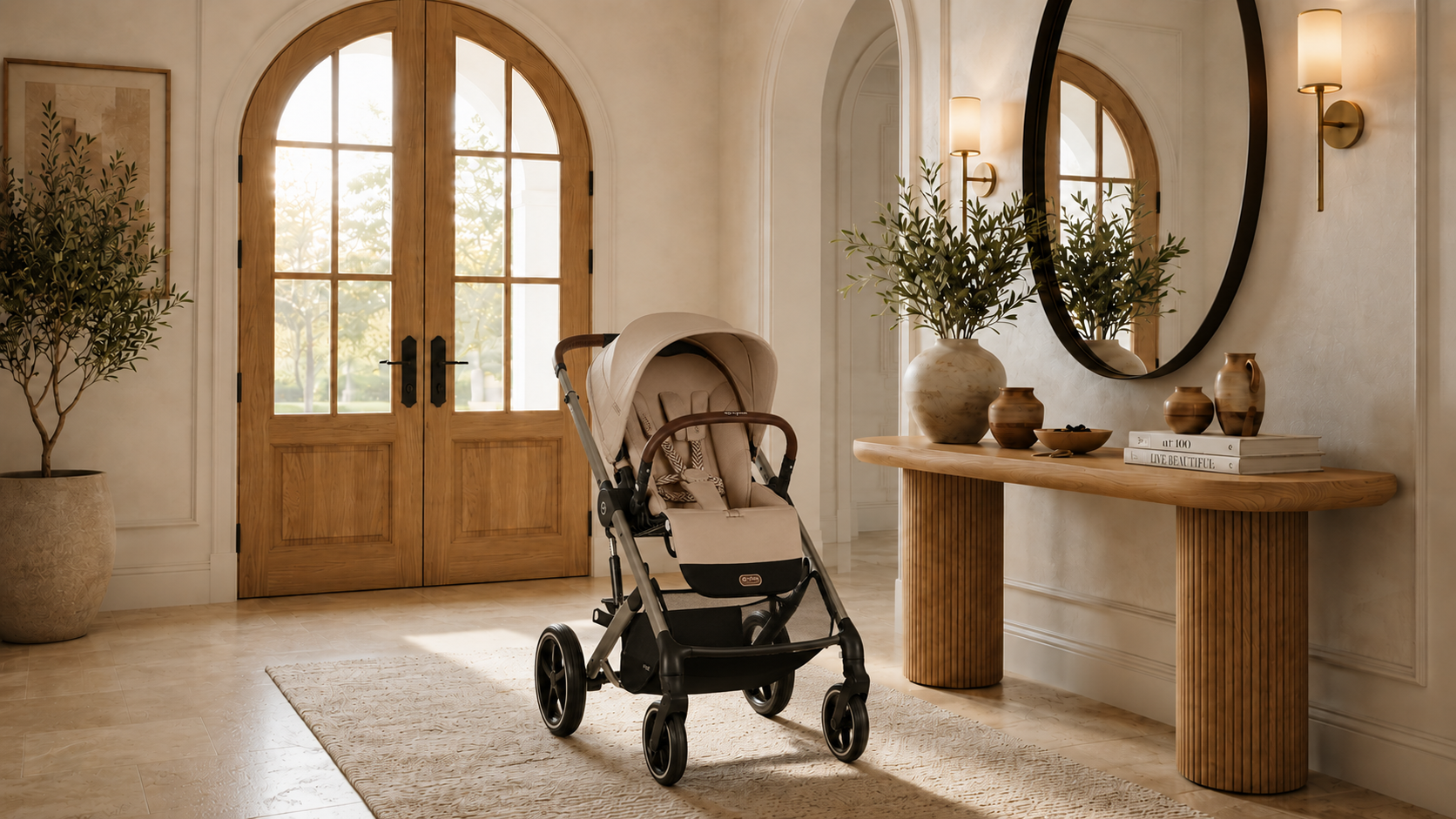
A separate changing table is not always necessary in a small nursery. A wide dresser paired with a compatible changing pad can create a practical diapering surface while also providing long-term storage for clothing, blankets, diapers, and everyday supplies.
Choose a dresser that is stable, deep enough to support the changing pad, and positioned where it will not block doors or walkways. Secure both the dresser and changing pad according to their manufacturers’ instructions.
Keep only the most frequently used products within reach:
Diapers
Wipes
Diaper cream
One spare outfit
A small basket for grooming essentials
Store backup supplies inside the drawers so the top remains uncluttered.
Small-space tip: A dresser-based changing station is most useful because it remains functional after the diaper stage. Once the changing pad is removed, the piece can continue serving as clothing and nursery storage.
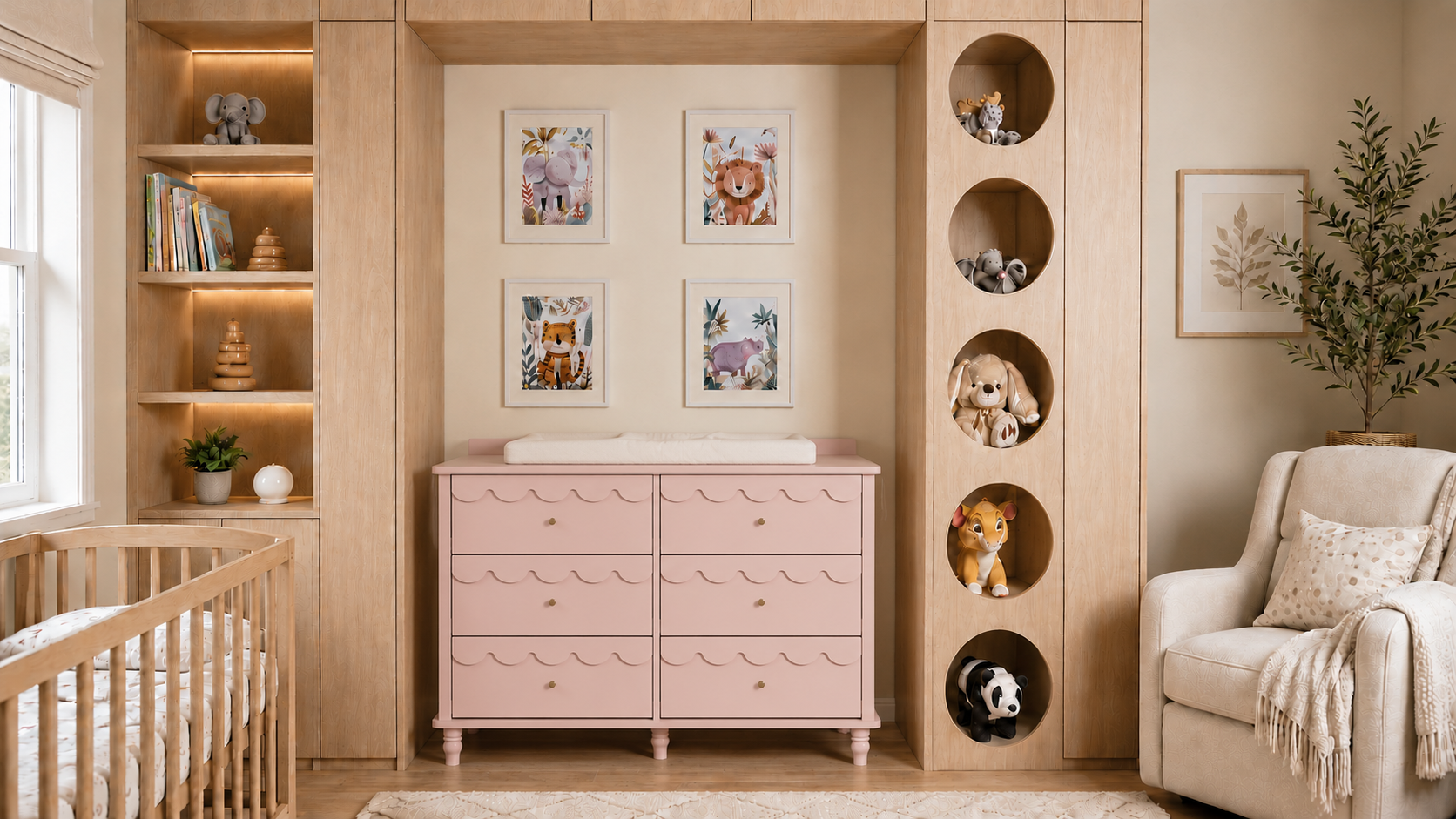
Featured Pick: Anbuy Scalloped 6-Drawer Dresser — Pink
The Anbuy Scalloped 6-Drawer Dresser in Pink combines nursery storage with a decorative fluted petal pattern and gently scalloped details. Its wide six-drawer design provides space for baby clothing, blankets, diapers, feeding accessories, and other everyday essentials.
Best for: Families creating a soft pink, romantic, or whimsical nursery who want one dresser to provide both storage and a possible changing-station surface.
Why it stands out: The six drawers help reduce the need for additional storage furniture, while the sculptural front adds personality without relying on extra nursery décor. The dresser can also remain useful as the child grows, making it a more lasting purchase than a dedicated changing table.
Consider: This product is sold as a dresser, not as a baby changing table. Confirm the top dimensions and weight capacity before placing a changing pad on it. Use only a pad that fits securely without extending beyond the dresser, attach it according to the pad manufacturer’s instructions, and anchor the dresser to the wall using appropriate anti-tip hardware. Check the assembled dimensions, drawer clearance, materials, installation requirements, and included hardware before purchasing.
Never leave a baby unattended on the dresser, even for a moment.
5. Create a Portable Changing Station
Not every diaper change needs to happen in the nursery. A portable diaper caddy can make a small home more functional, especially when the baby sleeps in one room and spends the day in another.
Keep the caddy edited and practical. Include six to eight diapers, a small package of wipes, diaper cream, two burp cloths, a lightweight changing mat, one spare bodysuit, and a small bag for soiled clothing.
Choose an organizer with structured sides, removable dividers, and a sturdy handle. The goal is not to store every baby product inside it, but to keep enough supplies for one day and refill the caddy as needed.
Small-space tip: Store the caddy near the room where your family spends the most time, then move it to the bedroom before nighttime changes.
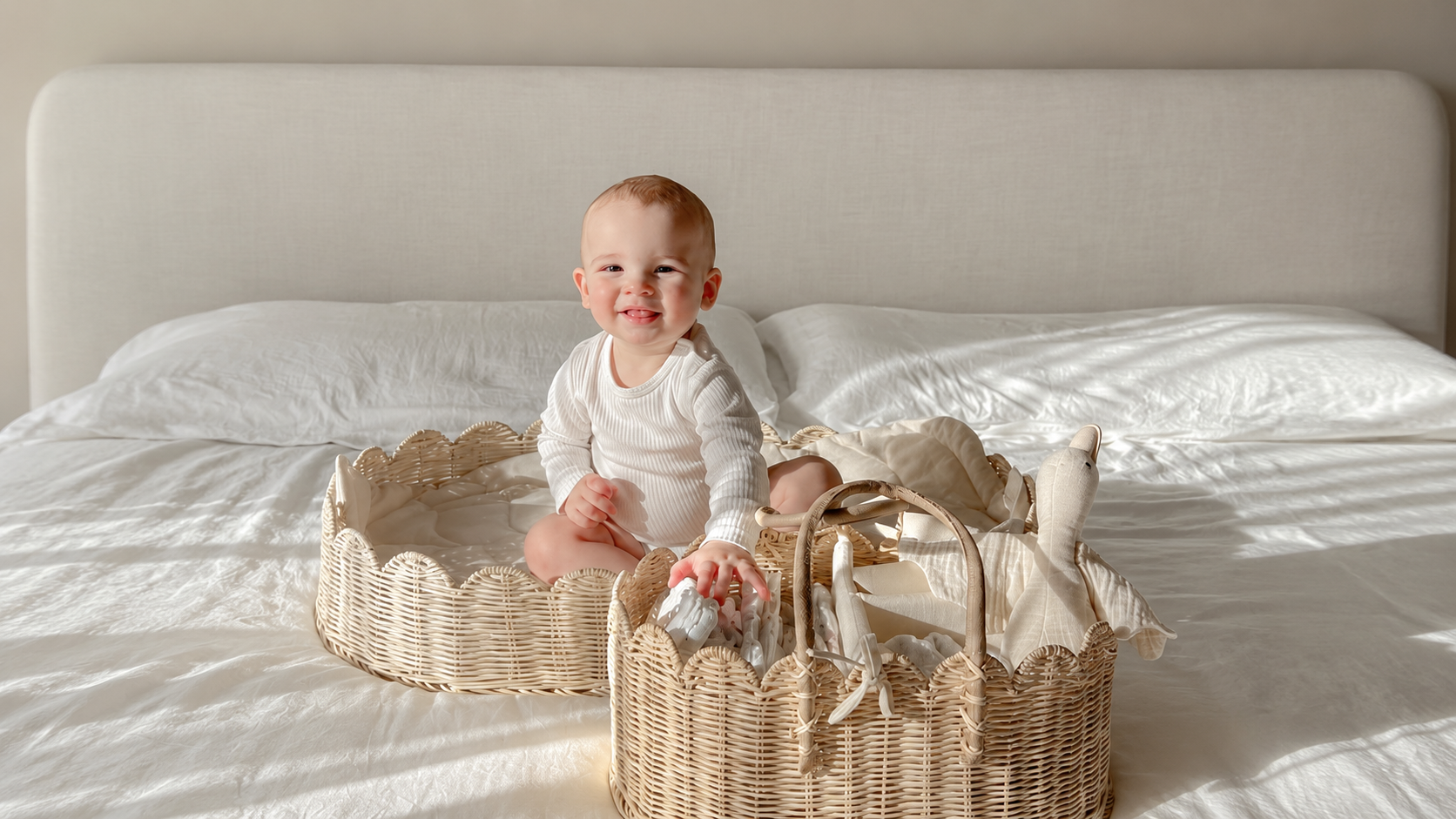
Featured Pick: Paper Rope Diaper Caddy Organizer with Removable Divider
This paper-rope diaper caddy organizer combines nursery storage with a warm, woven appearance that coordinates well with neutral and natural interiors. According to the product title, it includes a removable divider and can also be used as a portable car organizer.
Best for: Families who want an attractive diaper organizer that can move between the nursery, bedroom, living room, and car.
Why it stands out: The removable divider allows parents to create separate sections for diapers, wipes, creams, clothing, and smaller accessories. Its basket-style design can remain visible in the room without making the space feel overly utilitarian.
Consider: Paper rope is not fully wipe-clean, so keep creams, liquids, and wipes inside separate containers to protect the basket from spills. Check the current dimensions, handle strength, divider construction, lining, weight capacity, and cleaning instructions before purchasing.6. Use Vertical Storage
When floor space is limited, walls become valuable storage areas.
Floating shelves, wall-mounted book ledges, peg rails, and over-the-door organizers can keep small items accessible without adding more furniture.
Useful wall-storage ideas include:
Narrow shelves above a dresser
Picture ledges for board books
Hooks for a baby carrier or diaper bag
A wall-mounted basket for swaddles
A peg rail for towels and lightweight clothing
A shallow shelf for grooming products
Keep heavier products in lower drawers or cabinets rather than on high shelves. Wall storage should be used for lightweight, frequently accessed items.
The Atelier Living recommendation: Match shelves to the wall or select light natural wood. Simple materials help the storage blend into the room rather than making the walls appear crowded.
6. Use Slim Vertical Storage
When floor space is limited, choose storage that uses height without extending too far into the room. Narrow bookcases, wall-mounted ledges, peg rails, and floating shelves can keep nursery essentials organized while preserving valuable walking space.
Useful vertical-storage ideas include:
Picture ledges for board books
Hooks for a baby carrier or diaper bag
Peg rails for towels and lightweight clothing
Narrow shelves for small baskets and décor
Slim bookcases for books, toys, and folded blankets
Keep heavier products on lower shelves or inside drawers. Upper shelves should hold only lightweight items that cannot fall into the crib, changing area, or play space.
The Atelier Living recommendation: Select storage in white or light natural wood so it blends into the room instead of making the walls feel crowded. Rounded edges and a shallow depth are especially helpful in compact nurseries.
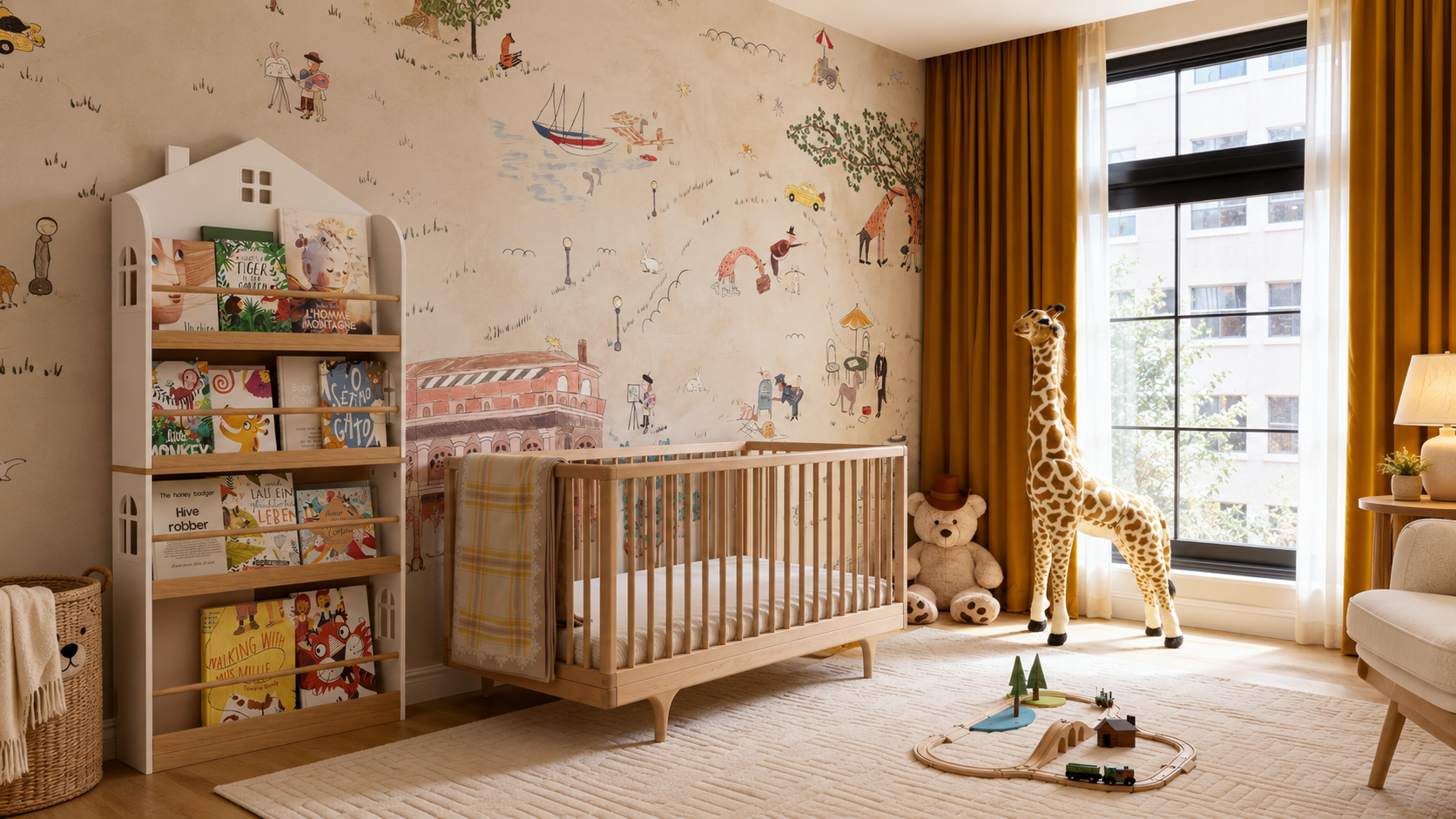
Featured Pick: UTEX Kids 4-Tier House-Shaped Bookshelf — White
The UTEX Kids 4-Tier House-Shaped Bookcase offers vertical storage in a slim, child-friendly design. According to the product title, it has a depth of approximately 5.8 inches, guardrails, rounded edges, a baseboard cutout for closer wall placement, and an anti-tip anchor.
Best for: Small nurseries, reading corners, and shared bedrooms that need accessible book storage without using a deep bookcase.
Why it stands out: The narrow profile uses wall height while taking up relatively little floor space. Its front-facing shelves can make board-book covers easy to see, while the house-shaped frame adds a playful detail without requiring a large piece of furniture.
Consider: This is a floor-standing bookshelf rather than a wall-mounted shelf. Secure it using the included anti-tip hardware and follow the manufacturer’s installation instructions. Confirm the exact dimensions, shelf capacity, baseboard clearance, materials, and included hardware before purchasing. Keep heavy items on the lowest tier and position the unit away from the crib and changing surface.
7. Choose Space-Saving Furniture With Built-In Storage
Every large piece of furniture in a small nursery or child’s room should earn its place. Storage furniture that uses vertical space or fits into an overlooked corner can reduce the need for extra cabinets, carts, and bins while keeping books and toys organized.
Consider pieces such as:
A dresser that also functions as a changing station
An ottoman or bench with concealed storage
A crib with a manufacturer-approved storage drawer
A bedside table with drawers
A slim bookcase or corner shelf
Low, child-accessible storage for books and toys
Avoid filling the room with several small decorative pieces. One thoughtfully selected storage unit is usually more useful than multiple baskets and narrow stands.
Before purchasing, measure the item’s full width, height, and depth. Also account for baseboards, doors, drawers, and the space needed to access each shelf comfortably.
The Atelier Living recommendation: Choose a compact storage piece that uses an otherwise empty wall or corner and can remain useful as the child grows.
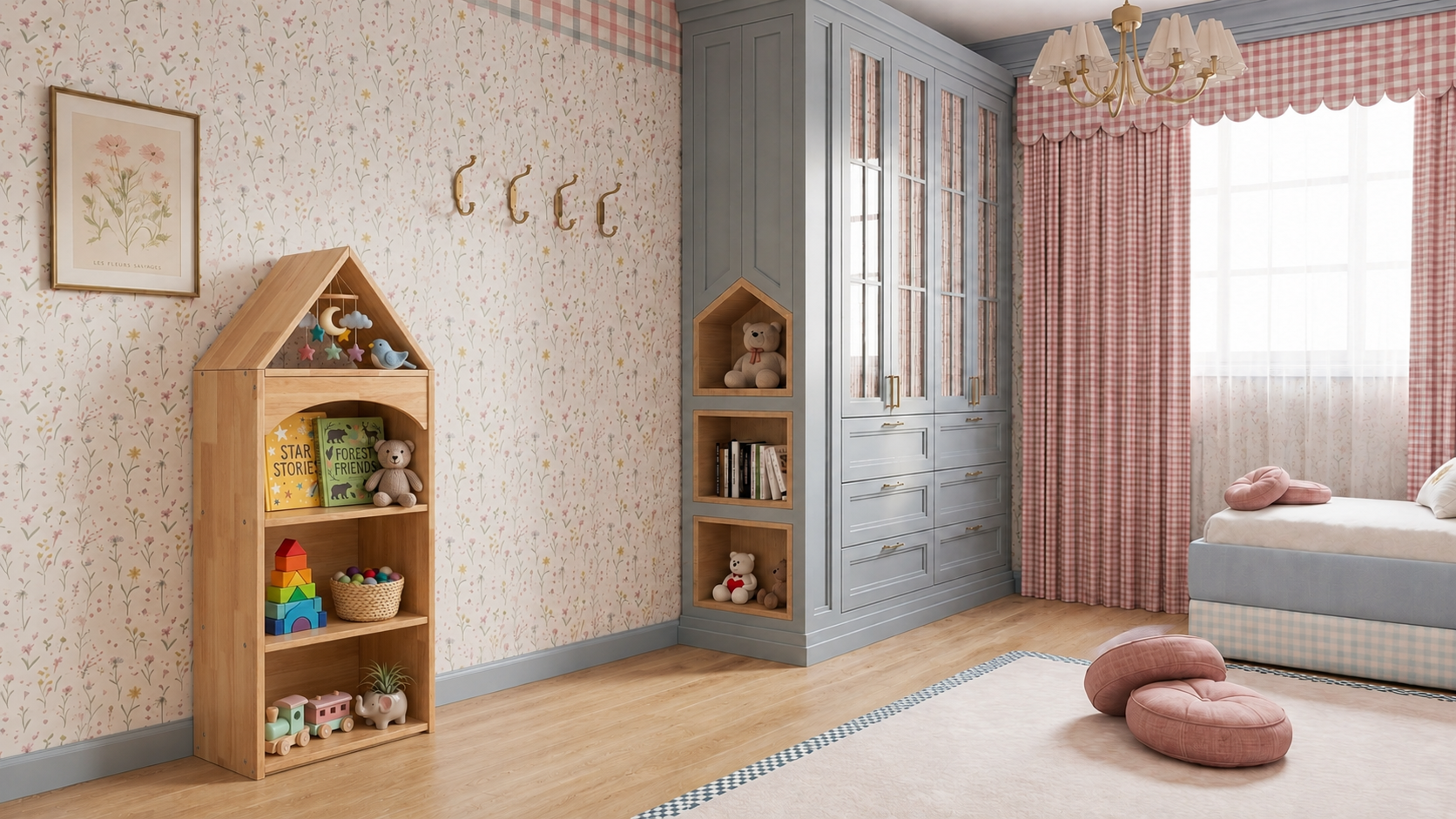
Featured Pick: OOOK Rubber Wood Montessori 4-Tier Corner Shelf
The OOOK Rubber Wood Montessori Shelf is a four-tier corner cabinet designed to organize books, toys, and everyday supplies without taking up the center of the room. According to the product description, it is made with 15mm FSC-certified rubberwood and includes rounded edges and a child-accessible height.
Best for: Small nurseries, playrooms, reading corners, classrooms, and shared bedrooms that need organized storage without using a wide bookcase.
Why it stands out: The corner shape makes use of an area that might otherwise remain empty, while the four open tiers keep books, baskets, and toys visible and easy to reach. Its natural wood construction can also coordinate well with neutral, Montessori-inspired, or modern nursery interiors.
Consider: Open shelves can look cluttered when they are overfilled, so use a small number of baskets or rotate toys rather than displaying everything at once. Confirm the assembled dimensions, shelf weight limits, materials, finish, included hardware, and anti-tip instructions before purchasing. Secure the unit according to the manufacturer’s guidance and keep heavier items on the lowest shelves.
8. Select a Baby Carrier for Hands-Free Travel
A baby carrier can be especially useful for families living in apartments, walking frequently, or navigating buildings without elevators. It takes up less storage space than a stroller and can make short outings, errands, and daily tasks at home more manageable.
Both soft wraps and structured carriers can work during the newborn stage. Wraps are lightweight and compact but may require more practice, while structured carriers are often quicker to fasten and adjust.
Look for:
Newborn compatibility
Adjustable straps
Supportive positioning
Breathable, washable fabric
A design that fits more than one caregiver
Clear instructions for each carrying position
Practice using the carrier at home before relying on it for an outing. Follow the manufacturer’s fitting instructions carefully, keep the baby’s face visible, and make sure the nose and mouth remain unobstructed.
A carrier may not completely replace a stroller for every family, but it can reduce how often you need to bring one along for short trips.
The Atelier Living recommendation: Choose a lightweight carrier that folds easily into a diaper bag and can be adjusted without complicated straps or inserts.
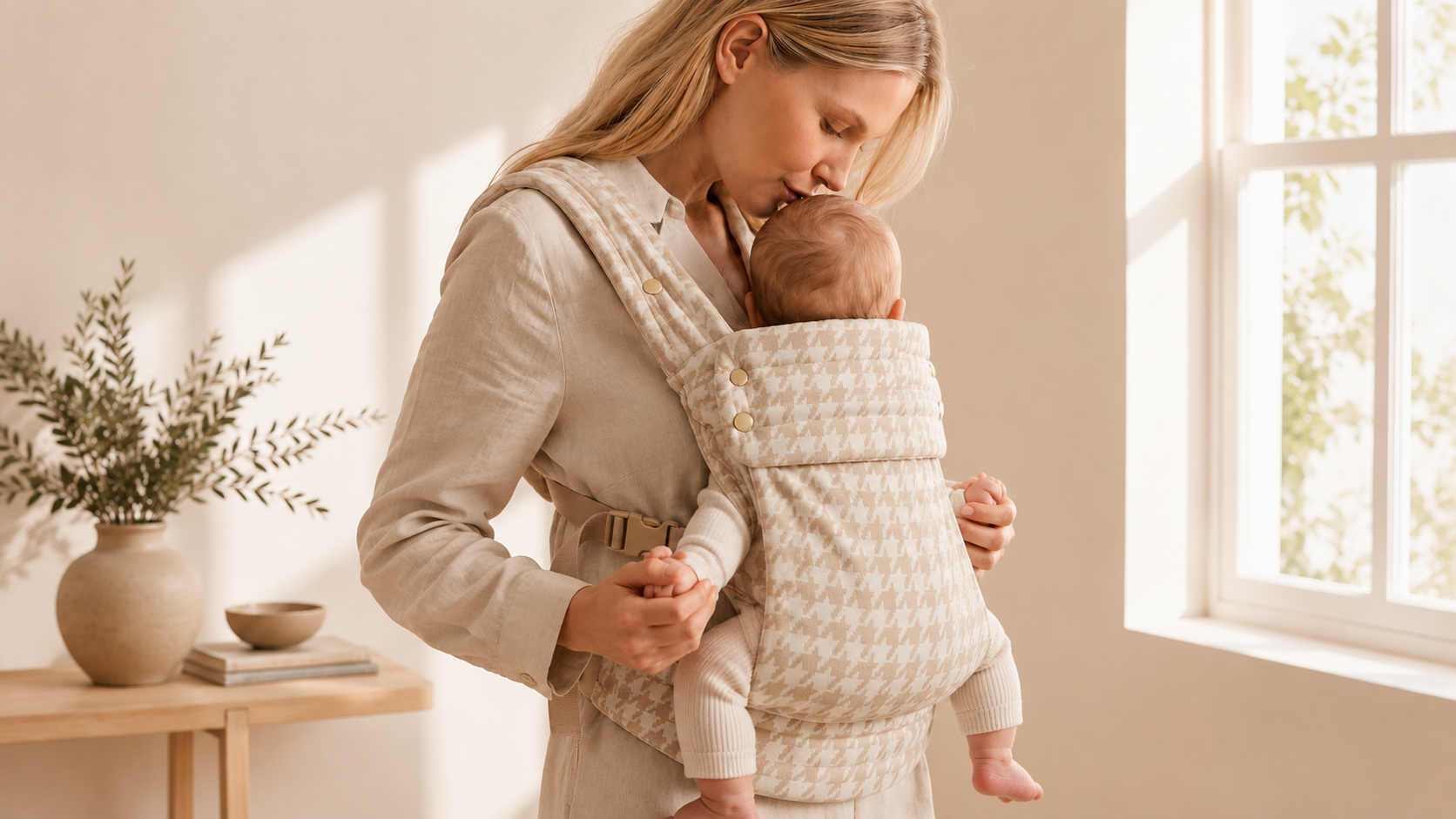
Featured Pick: Ergonomic Baby Carrier — Houndstooth
This ergonomic baby carrier in Houndstooth is described as a lightweight cotton carrier designed for use from the newborn stage through the toddler years. Its compact construction makes it a practical option for families who want hands-free support without storing a bulky travel item.
Best for: Apartment living, short walks, errands, travel, and keeping the baby close while completing simple tasks at home.
Why it stands out: The breathable cotton construction may feel more comfortable in warmer weather, while the neutral houndstooth pattern gives the carrier a polished appearance that can coordinate easily with everyday clothing. Its lightweight design should also be easier to fold and store than many heavily structured carriers.
Consider: Confirm the exact minimum and maximum weight limits, newborn positioning requirements, available carrying positions, cleaning instructions, and whether an infant insert is required. Fit can vary between adults, so review the strap-adjustment range before purchasing. During use, keep the baby upright and close enough to monitor, with the face visible and the chin positioned away from the chest.
9. Choose Collapsible Bath Products
Traditional infant tubs can be difficult to store in a small bathroom. A collapsible baby bathtub can fit more easily behind a door, beside a vanity, or inside a closet when it is not in use.
Look for a tub that:
Drains completely
Has a stable, nonslip base
Can stand or hang to dry
Folds without complicated parts
Includes removable, washable support when needed
Fits comfortably inside your bathroom or shower area
Keep the rest of the bath setup minimal. Most newborn routines require only a gentle baby wash, several soft washcloths, two absorbent towels, and a small grooming brush. Store everything together in one basket rather than spreading products across several bathroom drawers.
The Atelier Living recommendation: Measure both the tub’s open and folded dimensions. A folding model is only space-saving when it fits your available storage area and is easy to collapse after each bath.
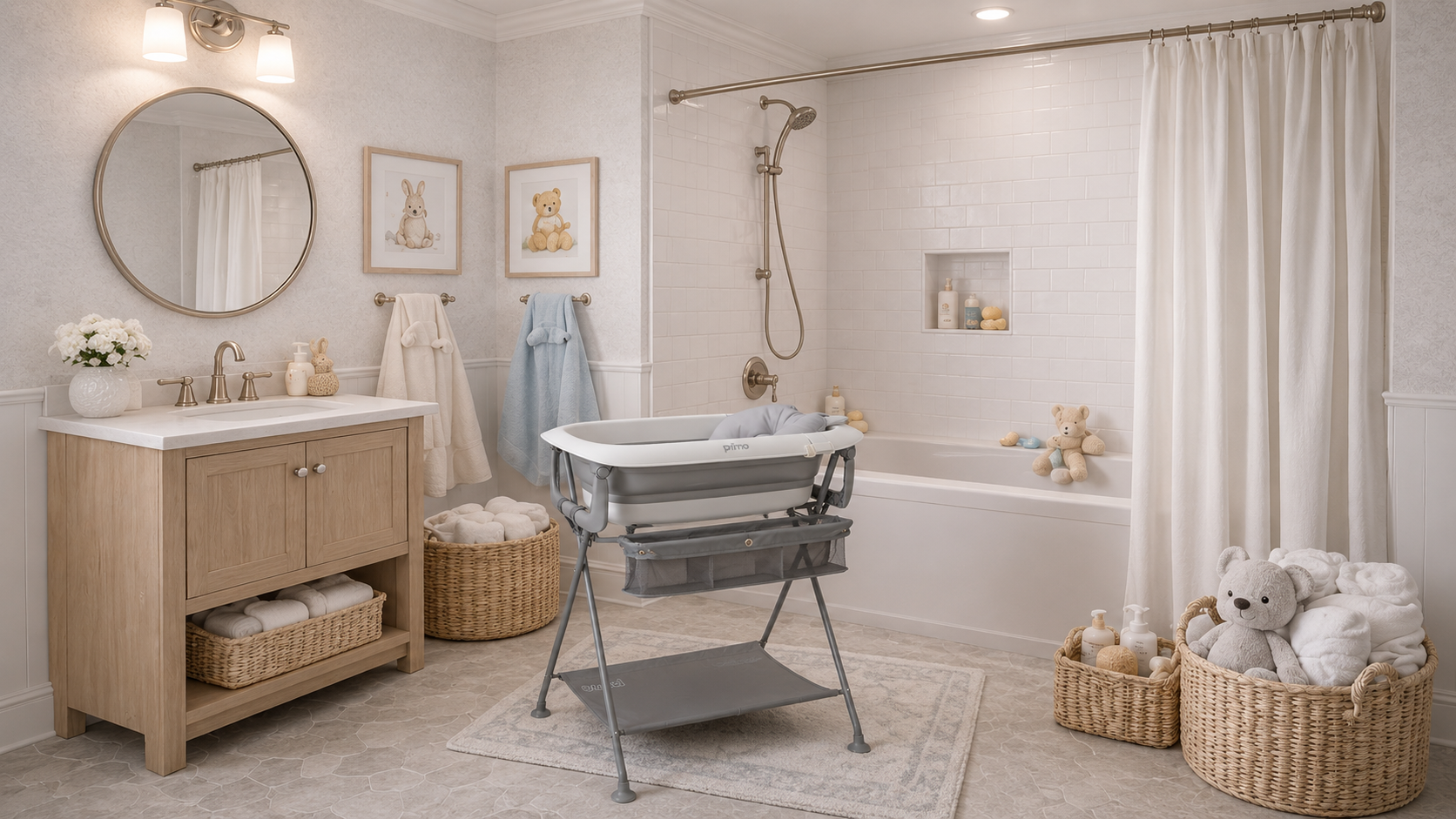
Featured Pick: PRIMO SquishSplash Collapsible Baby Bath and Folding Stand
The PRIMO SquishSplash Collapsible Baby Bath and Folding Stand combines a folding bathtub, elevated stand, and ergonomic infant cushion in one complete bathing station. According to the product title, it is designed for newborns and toddlers from approximately birth through 24 months.
Best for: Families with limited bathroom storage who want a baby tub that can fold away between uses.
Why it stands out: The collapsible design can reduce the amount of permanent floor space needed for bath equipment, while the folding stand may allow caregivers to bathe the baby at a more comfortable height. The included infant cushion provides additional support during the early stage and may be removable as the child grows.
Consider: Confirm the tub’s open and folded dimensions, stand height, maximum weight, age guidance, drainage system, cushion-care instructions, and storage requirements before purchasing. Make sure the stand is fully locked on a stable, level surface before every bath.
Never leave a baby unattended in or near water, even for a moment. Keep one hand on the baby, prepare all supplies before beginning, and do not rely on the cushion or stand as a safety device.
10. Limit Duplicate Products
Duplicates can be helpful, but too many create clutter. In a small home, focus on duplicates that reduce laundry or support daily routines.
Useful duplicates may include:
Two fitted crib sheets
Two waterproof mattress protectors
Several burp cloths
Two bath towels
A few simple bodysuits
One spare diaper-bag outfit
Products you may not need in multiples include:
Sound machines
Bottle warmers
Large play mats
Baby loungers
Grooming kits
Bulky toys
Decorative blankets
Wait until you understand your baby’s preferences before purchasing more.
11. Rotate Toys Instead of Displaying Everything
Newborns and young babies do not need a large toy collection. A small basket with a few age-appropriate items is easier to manage and can feel less overwhelming.
Keep a simple selection available:
A soft rattle
A silicone teether
A fabric book
A high-contrast card
A small grasping toy
Store the remaining toys in a closed bin and rotate them every week or two. This keeps the room visually calm and can make familiar toys feel interesting again.
For more ideas, explore our Montessori Toys and Nursery Inspiration sections.
12. Keep One Clear Surface
Small rooms feel more spacious when at least one visible surface remains mostly clear.
This could be:
The top of a dresser
A bedside table
A shelf
An entryway bench
Part of the changing station
Instead of displaying every baby product, use drawers, baskets, and cabinets to contain everyday supplies. Leave out only the items needed for the current routine.
A small nursery does not need to feel empty, but it should feel easy to move through and easy to reset.
A Simple Small-Space Baby Checklist
Before buying a new baby product, ask:
Where will it be stored?
Know its permanent location before bringing it home.
Does it serve more than one purpose?
Multifunctional products are especially valuable in compact homes.
Is it easy to move or fold?
Portability can make shared rooms more flexible.
Will it still be useful in six months?
Products with a short lifespan should be compact, affordable, or easy to resell.
Can it be cleaned easily?
Simple materials and washable covers reduce the need for extra replacements.
Final Thoughts
A small home can still provide everything a newborn needs. The most successful setup is not the one with the most products; it is the one that supports daily routines without creating unnecessary clutter.
Start with a safe sleep space, a compact changing station, a stroller or carrier that fits your lifestyle, and storage that uses walls and drawers efficiently. Keep current-size clothing and daily supplies accessible, while storing backup products out of sight.
By choosing compact, flexible, and easy-to-organize essentials, you can create a calm baby space that feels functional, beautiful, and comfortable for the entire family.
For more practical newborn recommendations, visit our Baby Section or read 15 Newborn Essentials You’ll Actually Use.