
15 Baby Items for a Ralph Lauren–Inspired Nursery
By Narine Avanesyan · The Atelier Living
This article contains affiliate links. The Atelier Living may earn a commission from qualifying purchases at no additional cost to you.
I have always believed that the spaces we create for our children become part of their earliest memories. As a mom, I do not choose something for my child simply because it is cute. I look at what it is made from, how it will function in our everyday life, whether it can grow with her, and—because I am a graphic designer—how it contributes to the visual language of the room.
For me, good design and motherhood are not separate things. A nursery can be practical and still feel refined. A toy can support play and still be beautiful enough to leave in the room. A crib sheet can be soft and washable while also introducing exactly the right scale of pattern. I love pieces that do more than one job: they support the child, simplify life for the parent, and make the space feel considered.
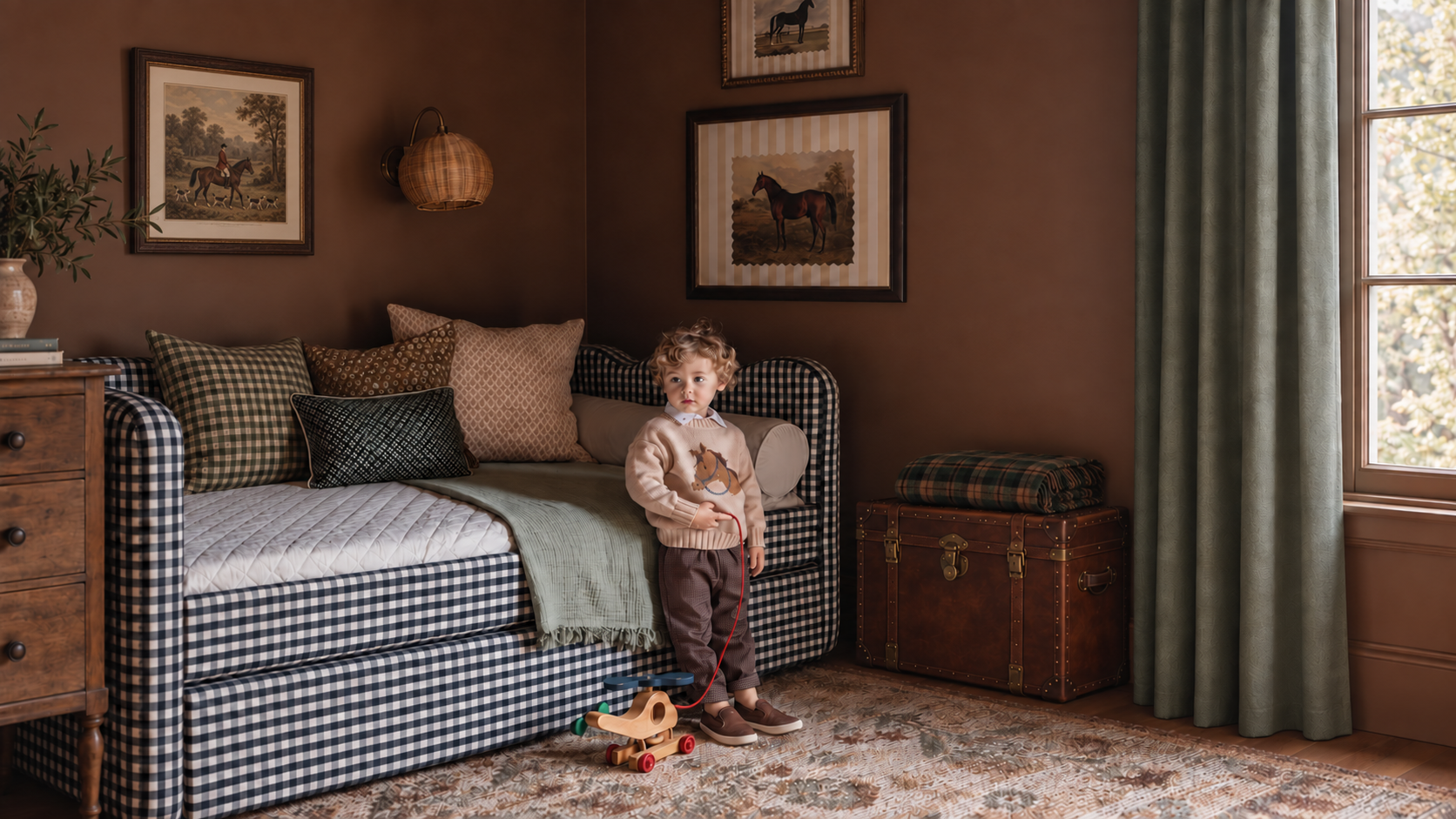
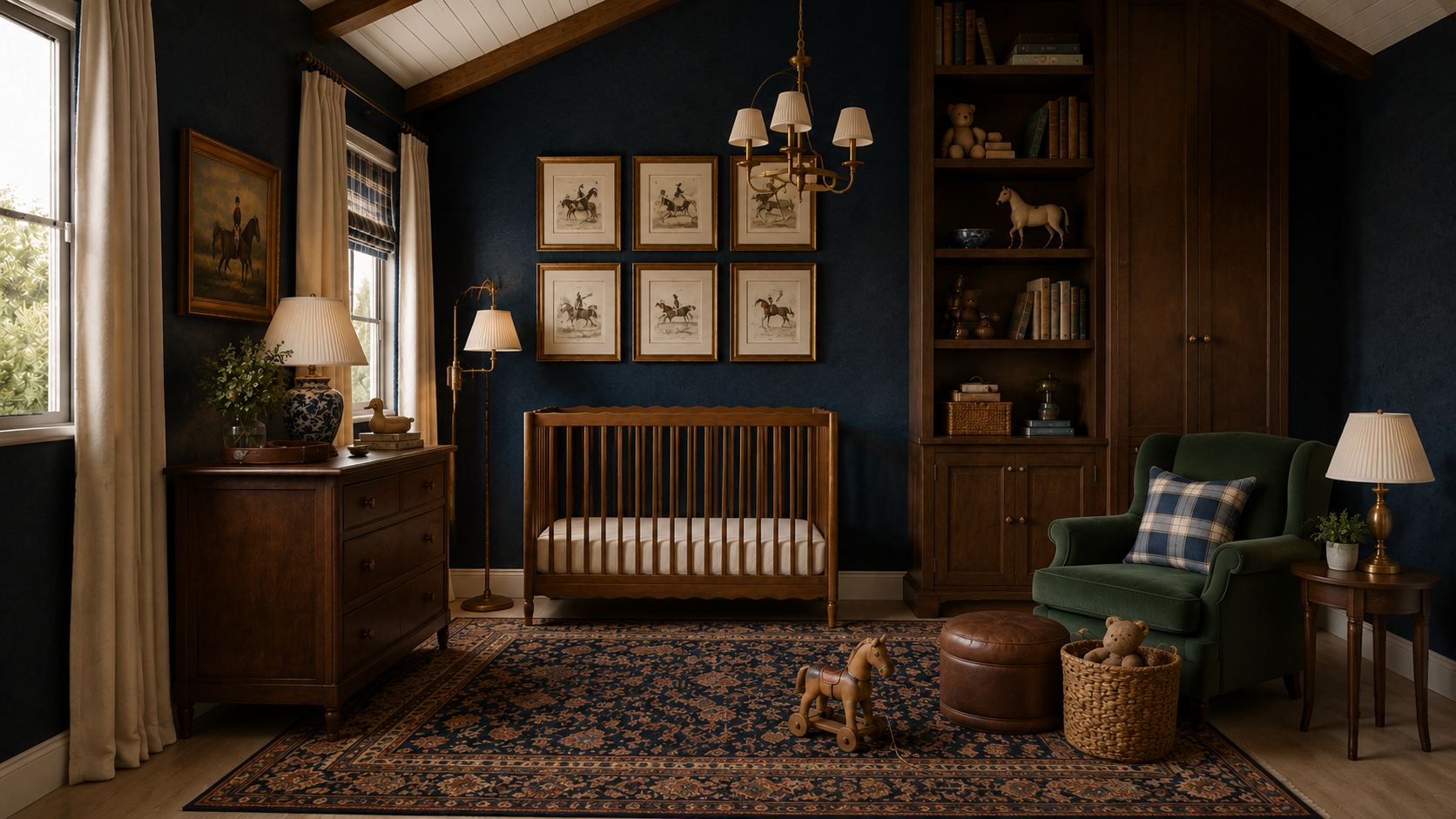
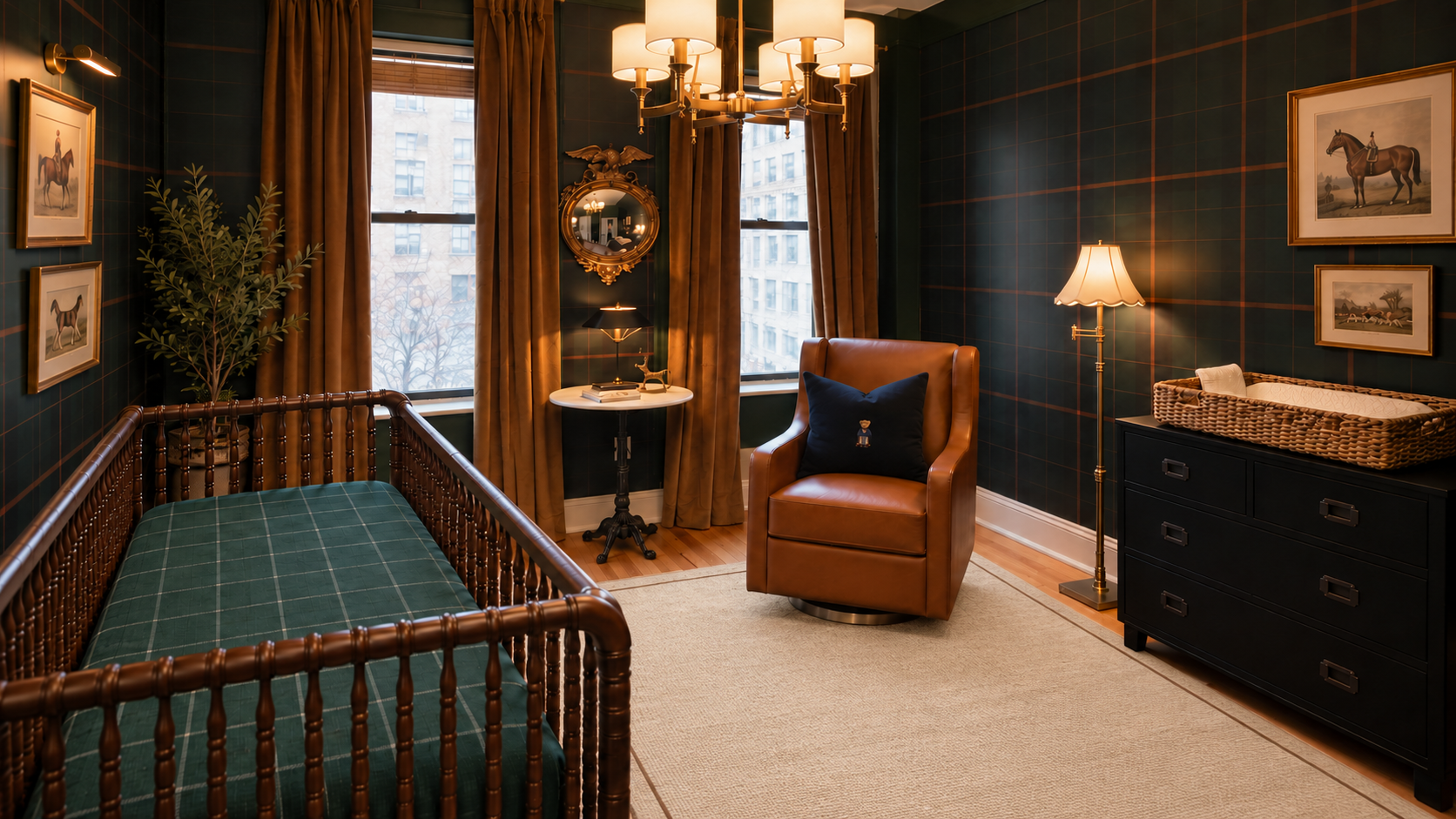
That is what draws me to a Ralph Lauren–inspired nursery. I am not interested in creating a literal theme. I love the feeling behind the aesthetic: warm walnut, deep navy, cream, heritage plaid, tailored stripes, natural fibers, vintage-inspired details, classic toys, and pieces that feel as though they could have been collected over time.
I also think children notice more than we realize. They grow up surrounded by the colors, materials, objects, and sense of order we choose for them. I want my child to grow up in a home where quality is appreciated, where beautiful things are also useful, and where good design feels natural rather than precious.
These 15 finds are my edit for creating that kind of nursery—a room that feels warm, elevated, playful, and genuinely made for childhood.
1. Babyletto Swell Convertible Crib in Natural Walnut
If I were building this room from the ground up, I would start with the crib. It is the largest visual element in the nursery and the piece that immediately establishes the tone.
The Babyletto Swell Convertible Baby Crib in Natural Walnut is exactly the kind of furniture I look for because the design is simple enough to feel modern, while the walnut finish brings the warmth and richness I associate with classic American interiors. The spindle detailing gives it character without making it ornate.
Function matters just as much to me here. This model is listed as GREENGUARD Gold Certified and is designed to convert from crib to toddler bed, daybed, and full-size bed, with four adjustable mattress heights and the toddler conversion kit included. I appreciate a piece that can move through different stages instead of being useful for only a short season of childhood.
Why I chose it: It gives the room a strong design foundation while offering the kind of longevity I value as a parent.
Designer note: Walnut has enough visual weight to anchor a pale room. I would surround it with cream, soft blue, navy, and natural fibers rather than adding several competing wood tones.
SHOP THIS FIND →
2. Little Unicorn Cotton Muslin Fitted Crib Sheet in Evergreen Plaid
Plaid is one of the easiest ways to bring a heritage feeling into a nursery, but pattern scale is important. For a baby's room, I prefer a check that feels tailored rather than loud.
The Little Unicorn Fitted Crib Sheet in Evergreen Plaid is made from 100% cotton muslin and sized for a standard crib or toddler mattress. The soft green plaid introduces pattern in a quiet way and gives the nursery that collected, country-house feeling without turning it into a theme.
As a mom, machine-washable fabric is an obvious advantage. As a designer, I like that the pattern can act almost like a neutral. From across the room, the small check reads as texture; closer up, it gives the crib personality.
Why I chose it: Natural cotton, everyday practicality, and a classic pattern that can work from babyhood into the toddler years.
Designer note: Let this be one of the room's main patterns. If the sheet is plaid, keep nearby wall treatments or larger textiles more restrained so the room does not become visually busy.
Safe-sleep note: For an infant's sleep space, keep the crib bare aside from a firm mattress and properly fitted sheet, and follow current safe-sleep guidance from your pediatrician and the American Academy of Pediatrics.
3. Checkered Fine-Cotton Baby Blanket in Mocha Plaid
I love the warmth that textiles bring to a nursery, especially when they feel beautiful enough to become part of the room instead of something that always needs to be put away.
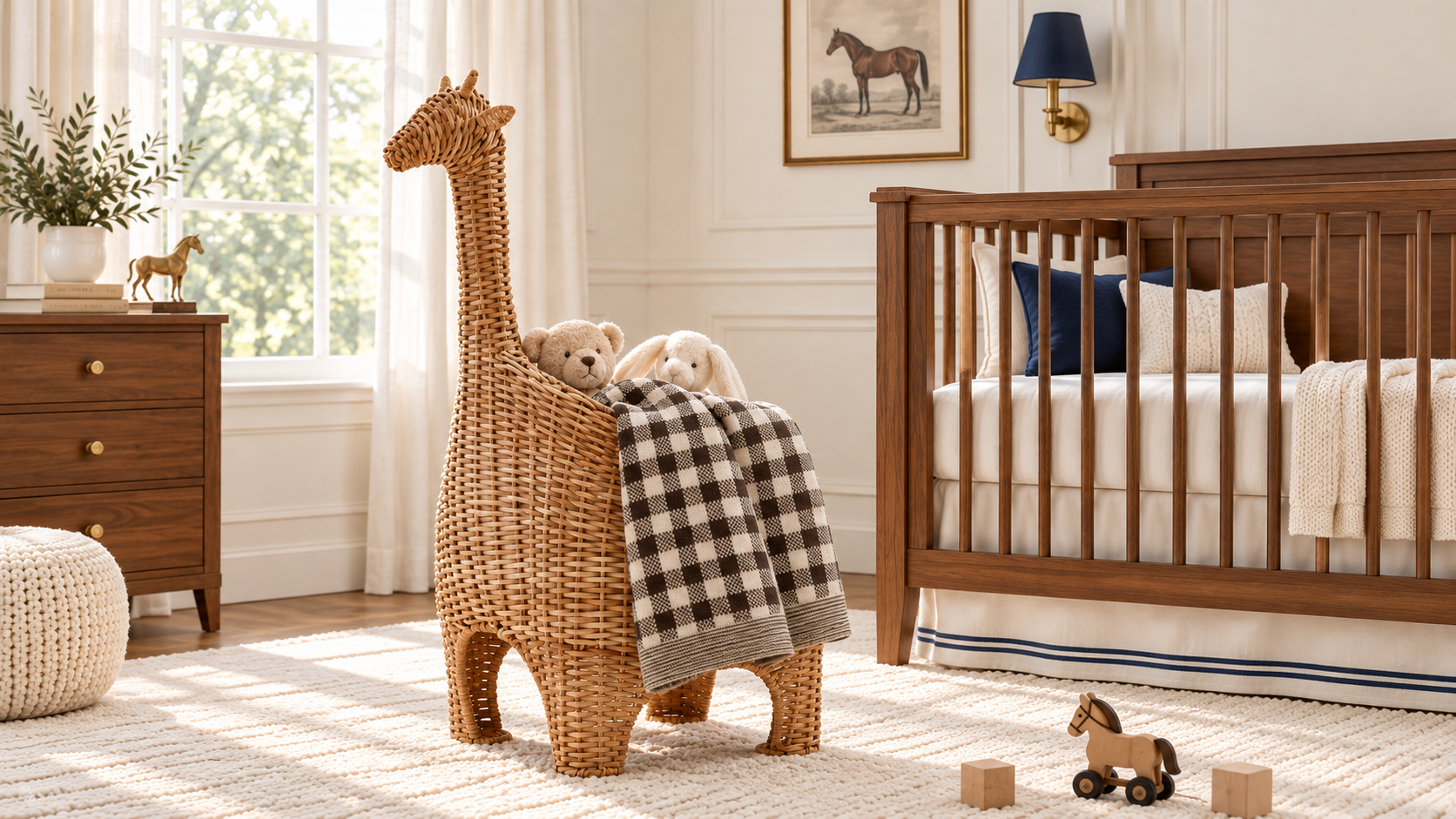
This checkered baby blanket in Mocha Plaid is described as 100% soft fine cotton and works as a receiving, stroller, or nursery blanket for babies and toddlers. The mocha-and-cream palette is especially appealing to me because it softens the navy and walnut elsewhere in this edit.
The check pattern has that classic, tailored quality I look for, but the neutral coloring keeps it gentle. Folded over a glider while the room is in use or stored in a woven basket, it adds another layer of warmth without overwhelming the space.
Why I chose it: Soft cotton, an easy neutral palette, and a pattern that feels timeless rather than baby-specific.
Designer note: Mocha is a useful bridge color. It connects warm walnut furniture with cooler navy and blue accents and keeps the palette from feeling too crisp.
Keep loose blankets outside an infant's crib during sleep.
4. Brown Faux-Leather Curtain Tiebacks
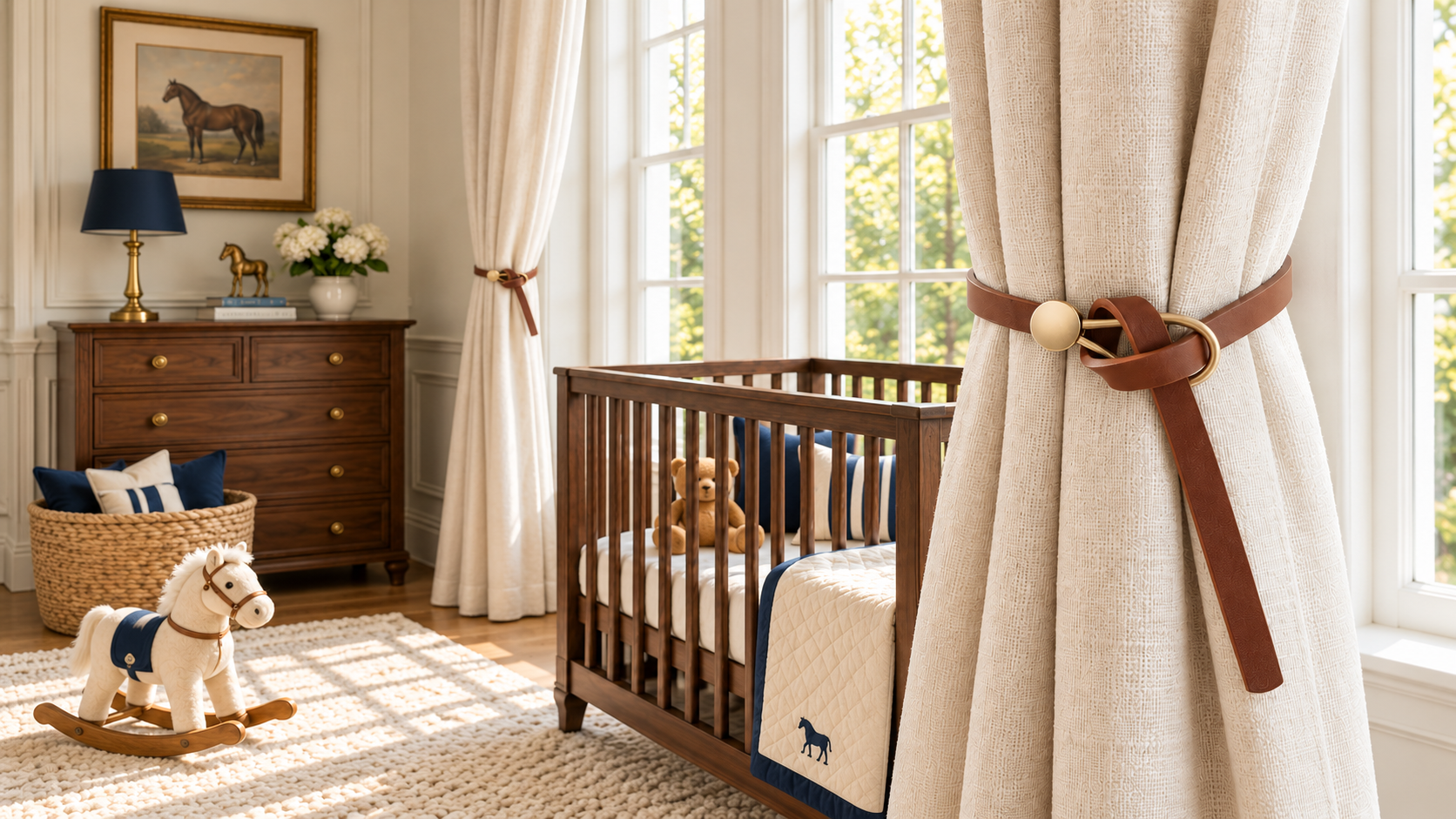
Small details can completely change how a nursery feels. These Brown Faux-Leather Curtain Tiebacks bring a tailored, heritage-inspired finish to the windows without making the room look overly decorated.
I chose them because the warm brown color works beautifully with walnut furniture, classic plaid fabrics, and soft cream curtains. The slim leather-look straps add just enough contrast to make simple drapery feel more considered—very much in keeping with the understated, equestrian character of a Ralph Lauren–inspired interior.
They are also wonderfully practical. The set includes four flexible tiebacks with metal button closures, so they can hold both lightweight curtains and heavier drapes without requiring hooks or drilling.
Why I chose them: They are an affordable finishing detail that makes basic nursery curtains look more polished and intentional.
Designer note: Pair the brown tiebacks with ivory or oatmeal linen curtains. The contrast will highlight the tailored detail while keeping the nursery bright, soft, and elegant.
5. Gingham Long-Sleeve Baby Romper
Even the clothes we choose can become part of the visual story. I love a baby in something sweet and comfortable, but I naturally gravitate toward classic patterns that do not feel overly trendy.
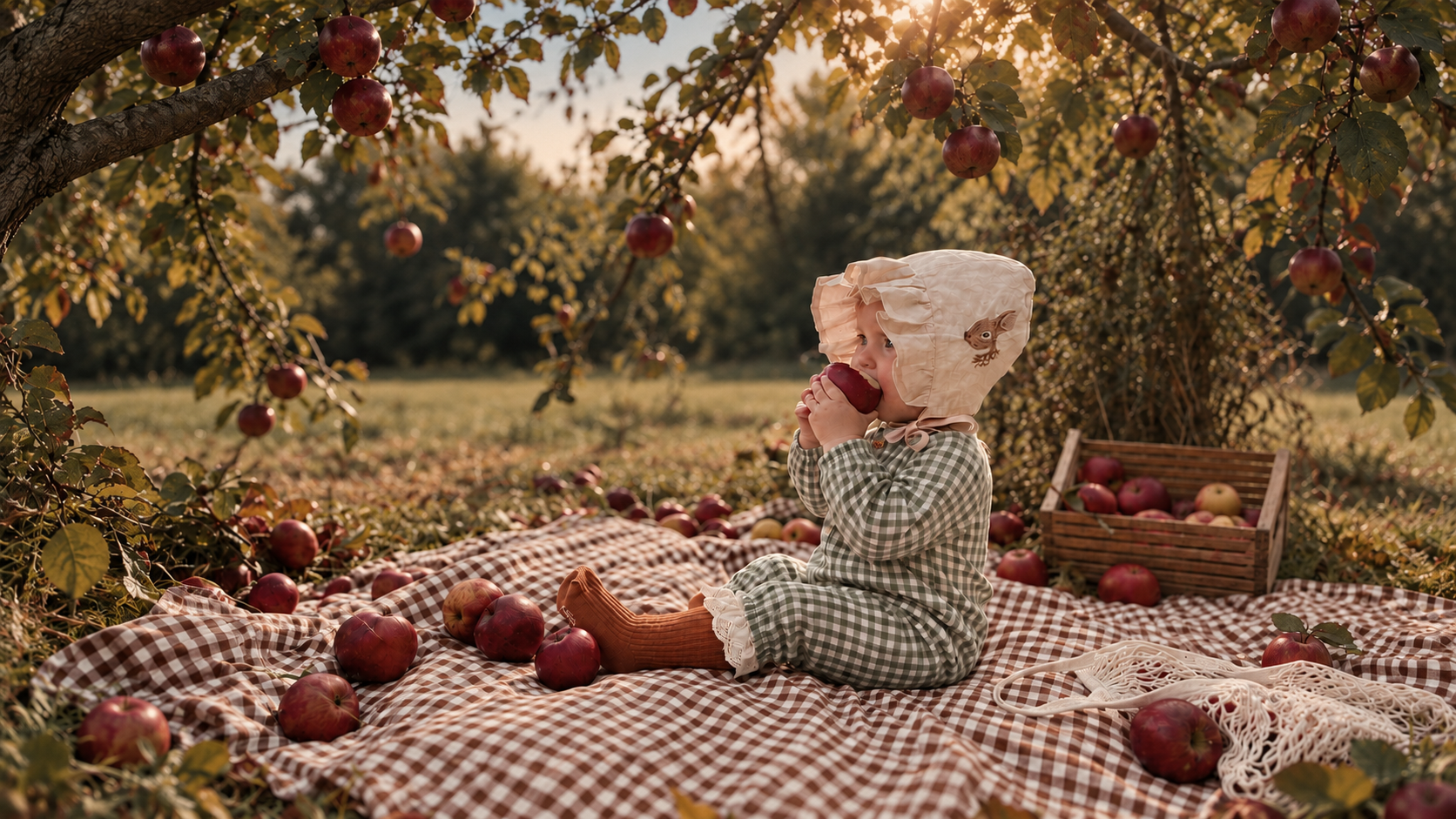
This gingham long-sleeve baby romper has a plaid/check look and a simple one-piece silhouette for boys or girls. It fits the room's heritage palette while still feeling playful and age-appropriate.
I included it because an elevated nursery is not only furniture and wall decor. It is the whole little world around the child—the textures they touch, the clothes they wear, the books and toys around them. A classic gingham romper is one of those small details that feels nostalgic in the best way.
Why I chose it: A timeless pattern, an easy one-piece format, and a look that feels sweet without being overly themed.
Designer note: Small-scale gingham photographs beautifully against solid backgrounds and natural wood because it adds graphic rhythm without needing a bright color.
6. Wood-Grain White Noise Machine
Not every beautiful nursery product needs to announce itself. In fact, one of my favorite design principles is allowing functional objects to visually recede when they are not meant to be the focus.
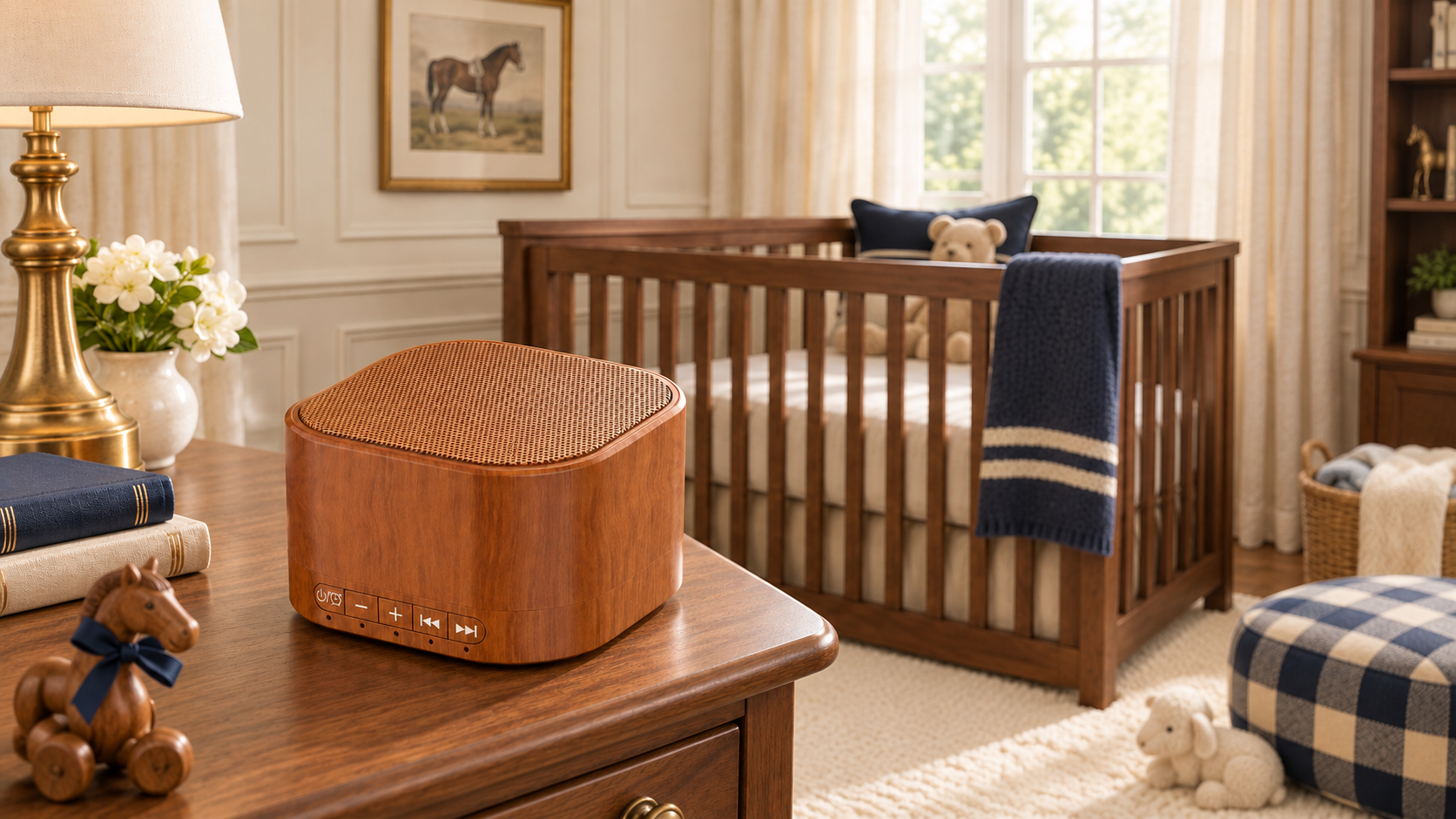
This wood-grain white noise machine offers 20 non-looping natural soothing sounds, a memory function, and a sleep timer. What makes it particularly appropriate for this edit is the wood-grain exterior. Instead of introducing another bright plastic object on the dresser or shelf, it visually relates to the warmer materials already in the room.
As a mom, I appreciate products that support the bedtime routine without complicating the space. A sound machine is fundamentally a functional choice; finding one that does not interrupt the design is a bonus.
Why I chose it: Useful sleep features in a finish that blends naturally into a warm, traditional nursery.
Designer note: Keep small electronics visually quiet. Place them where they are safe and functional, but let furniture, artwork, and textiles remain the visual focus.
7. labebe Wooden Rocking Horse in Natural Wood
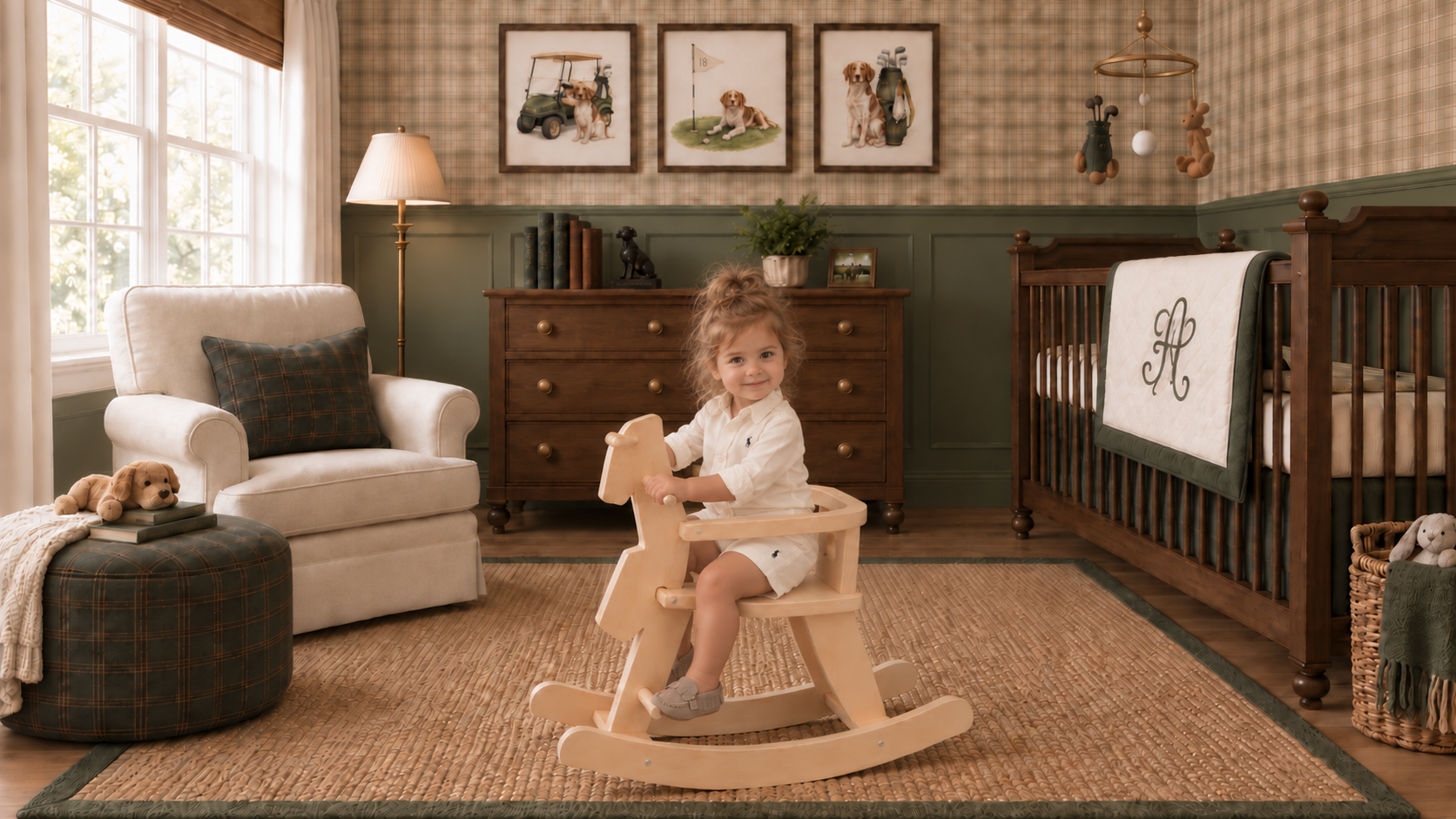
If there is one toy in this edit that captures the entire mood, it may be the labebe Wooden Rocking Horse. It feels nostalgic, sculptural, and unmistakably connected to childhood.
The natural wood finish works beautifully with the walnut crib and pine shelves without feeling like a matching set. This model is designed for children 12 months and older and includes a removable fence, allowing the toy to adapt as the child grows and develops more confidence.
As a mom, I love the idea of choosing toys that encourage active, imaginative play. As a designer, I love when a toy has enough character and material warmth that it can stay visible in the room rather than being hidden away.
Why I chose it: It is both a play object and a beautiful piece of nursery design, with a classic shape that does not depend on trends.
Designer note: Children's furniture and toys do not need to match the main furniture exactly. Slight variation in natural wood makes a room feel layered and collected.
8. Vintage Teddy Bear Sports Wall Art — Set of Six
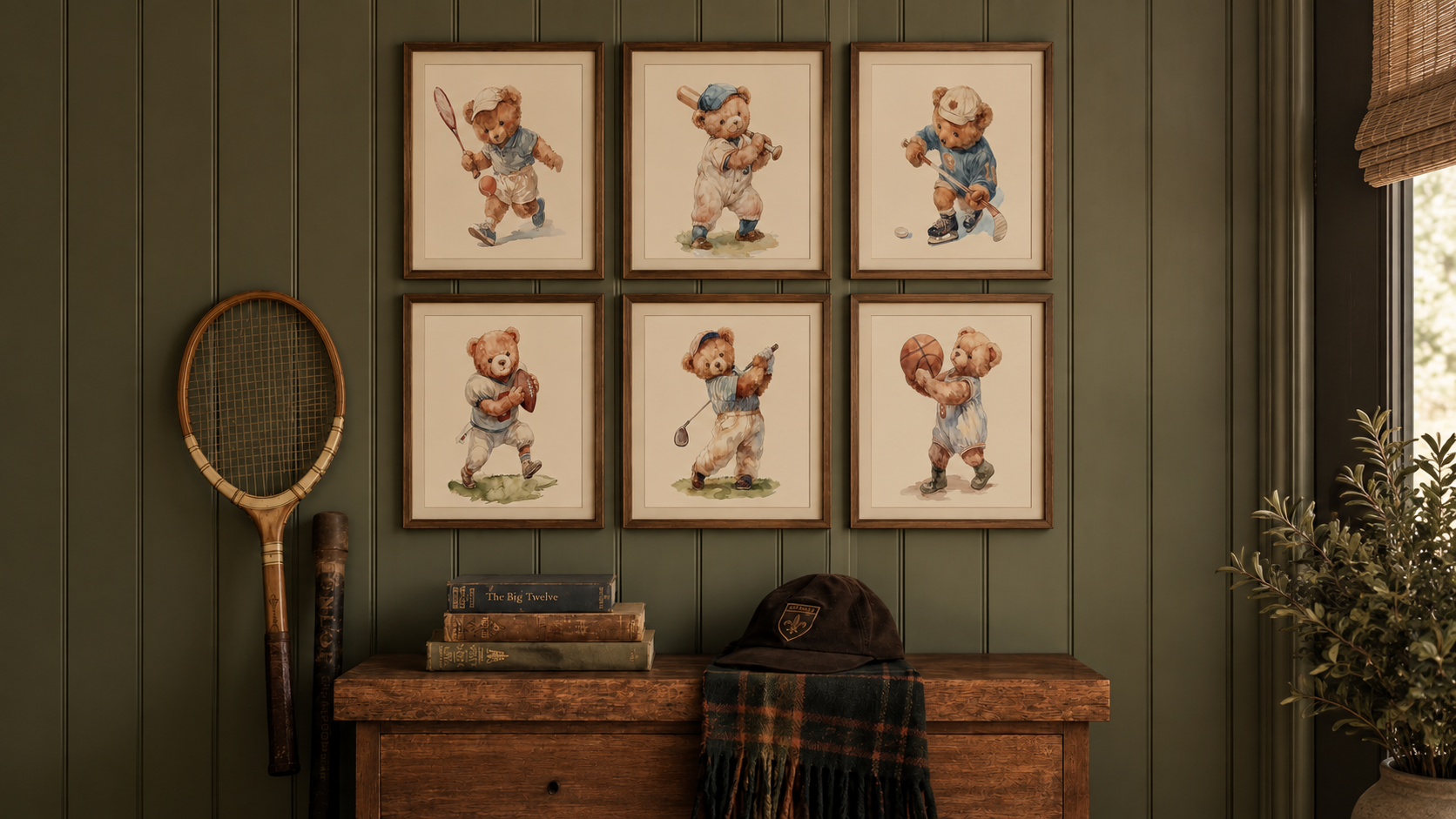
Artwork is where a child's personality can come into a sophisticated nursery without sacrificing the overall design. This vintage teddy bear sports wall art set includes six 8 x 10-inch wood-framed prints, combining a nostalgic teddy-bear subject with classic sports imagery.
I like that balance. The teddy bears make the artwork clearly appropriate for a child's room, while the vintage treatment keeps it from feeling cartoonish or overly bright.
As a graphic designer, I also like working with a set because it gives you control over grid, spacing, and visual rhythm. Six small pieces can create a strong gallery composition above a dresser, bookcase, or reading area.
Why I chose it: It brings childhood charm into the room through an art direction that still feels polished and collected.
Designer note: With six frames, spacing is everything. Keep the gaps between frames consistent so the collection reads as one intentional composition rather than six unrelated pictures.
9. Long Live Boyhood Vintage Navy Throw Pillow Cover
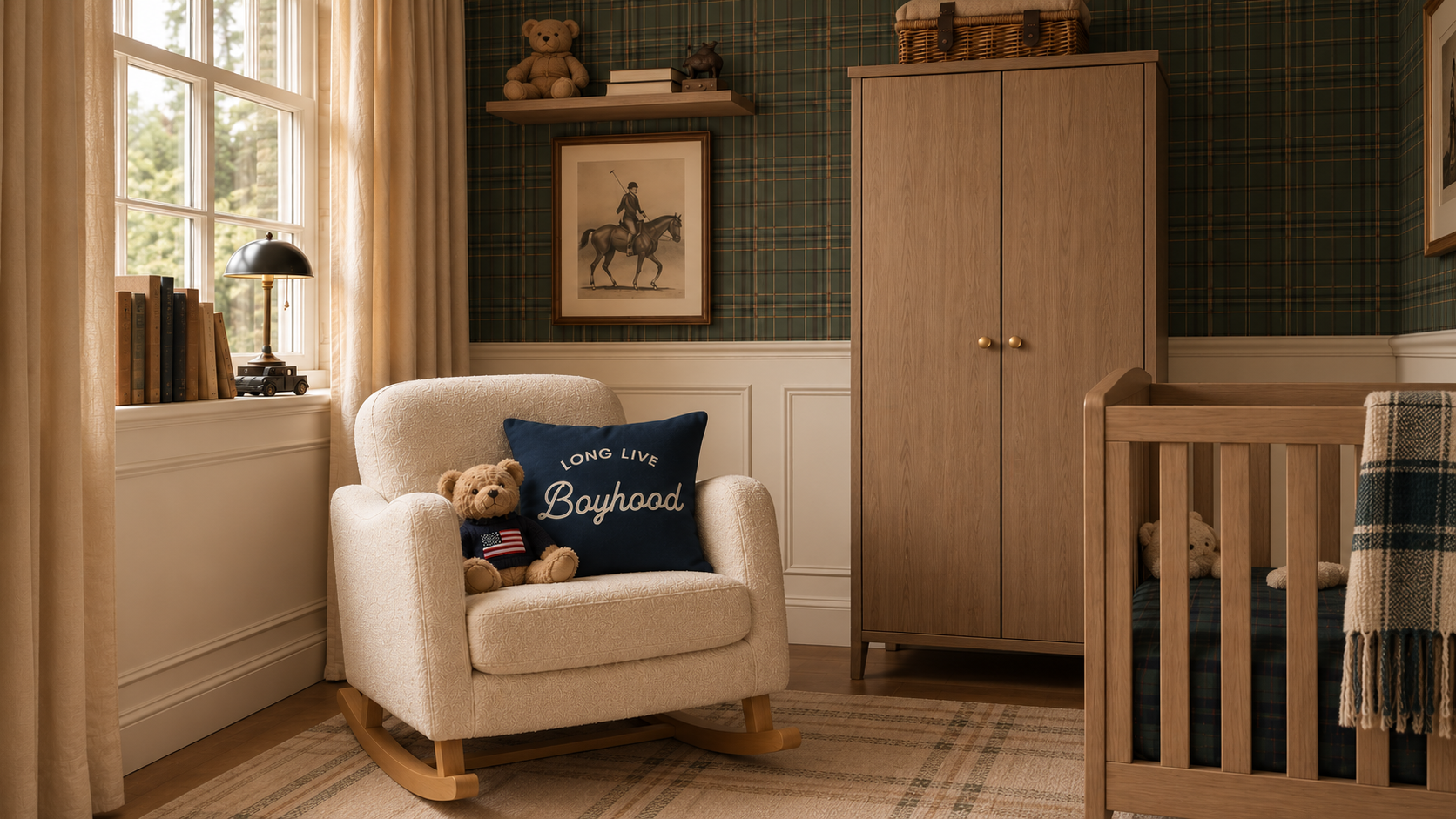
Deep navy is one of my favorite colors for a classic nursery because it gives softer neutrals something to work against. The Long Live Boyhood throw pillow cover adds that deeper note while bringing in a nostalgic, boyhood-inspired message.
I would use this on a glider, reading chair, or window seat—not in the crib. It is a small accent, but it helps reinforce the room's palette and adds personality without requiring another large piece of furniture or decor.
I particularly like that it feels more like something from a traditional den or boys' room than typical nursery decor. That is useful if you want the room to transition naturally as your child gets older.
Why I chose it: It introduces navy, typography, and personality in one easy-to-change layer.
Designer note: Typography is a strong graphic element. If you use a pillow with text, keep the artwork around it more image-led so the room does not become crowded with words.
Decorative pillows should never be placed in an infant's crib or sleep space.
10. Navy Blue Kids Bookcase with Six-Cube Storage
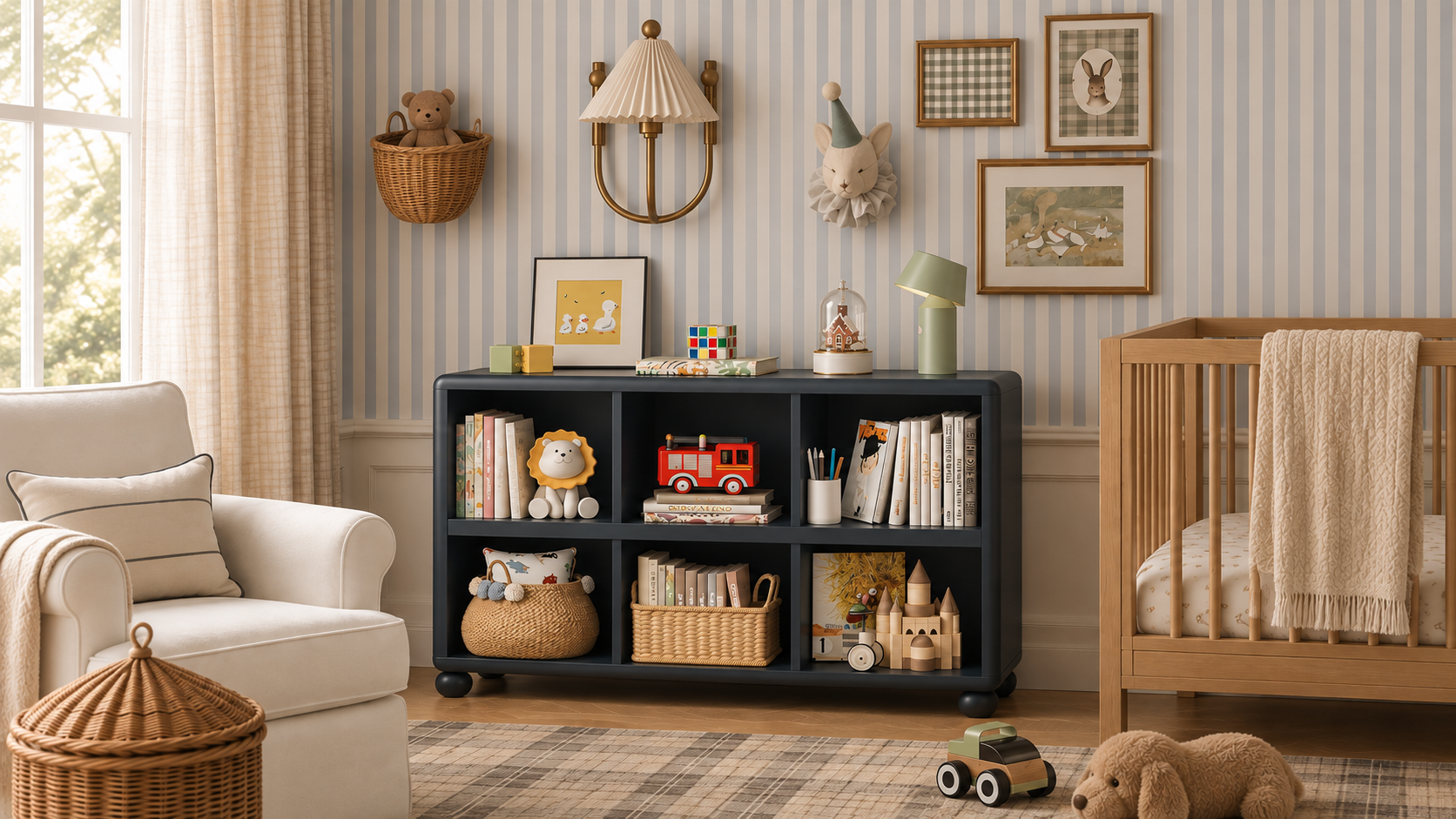
I am a big believer that a child's room should make it easy for the child to interact with the space. The navy blue kids bookshelf with six-cube storage combines open book display with toy storage, giving books and playthings a defined home at child-friendly height.
The rounded design and sphere feet make it feel softer than a standard boxy storage unit, while the navy finish introduces the strongest color block in this edit.
From a parenting perspective, accessible storage can help make tidying feel like part of the routine. From a design perspective, contained storage is what allows a room with children's things to still feel calm.
Why I chose it: It gives books and toys a practical system while making navy a purposeful part of the room's architecture.
Designer note: Because the bookcase itself is a strong color, keep the objects immediately around it lighter—cream baskets, pale books, or natural wood—to create contrast and prevent a heavy corner.
SHOP THIS FIND →
11. Selena Scallop Handmade Wool Area Rug in Navy
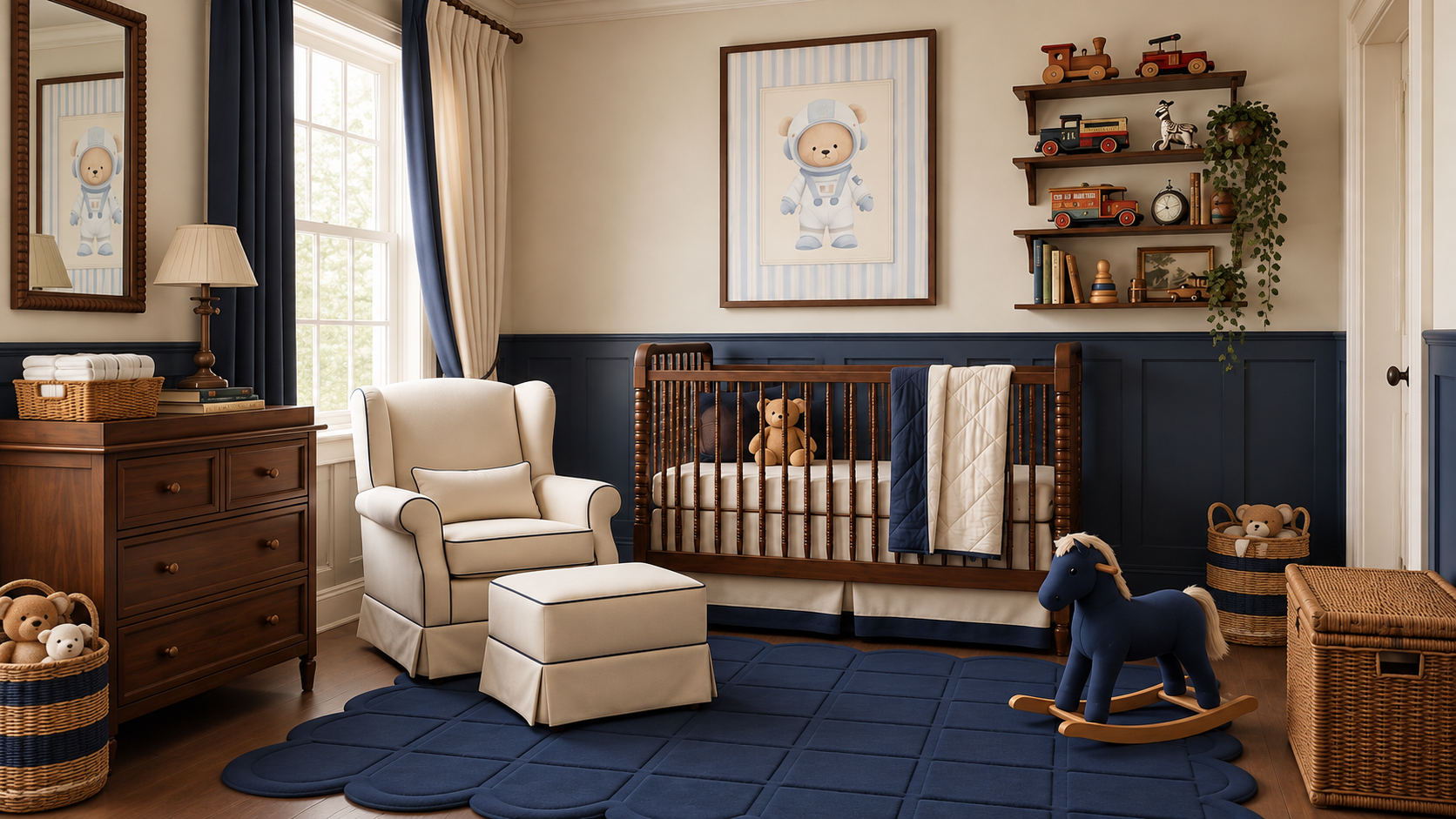
A rug changes the entire visual temperature of a room. The Selena Scallop Area Rug, a 5 x 8-foot handmade wool rug in navy blue with a non-slip natural backing listed with 100% cotton, brings softness underfoot while giving the room a confident graphic foundation.
What drew me to it is the scalloped form. The curve is playful enough for a child's space but still sophisticated. Against a rectangular crib, dresser, and shelving, that rounded edge introduces a welcome change in geometry.
I also like wool for the richness and texture it can bring to a room. Rather than relying on printed motifs, the rug creates interest through material, shape, and color.
Why I chose it: The wool texture feels substantial, the navy anchors the palette, and the scalloped edge brings softness to a room filled with straight furniture lines.
Designer note: Repeating curves makes an unusual shape feel intentional. The rug's scallop can quietly relate to rounded shelf corners, a globe lamp, or circular drawer knobs.
12. Woven Paper-Rope Diaper Caddy with Removable Divider
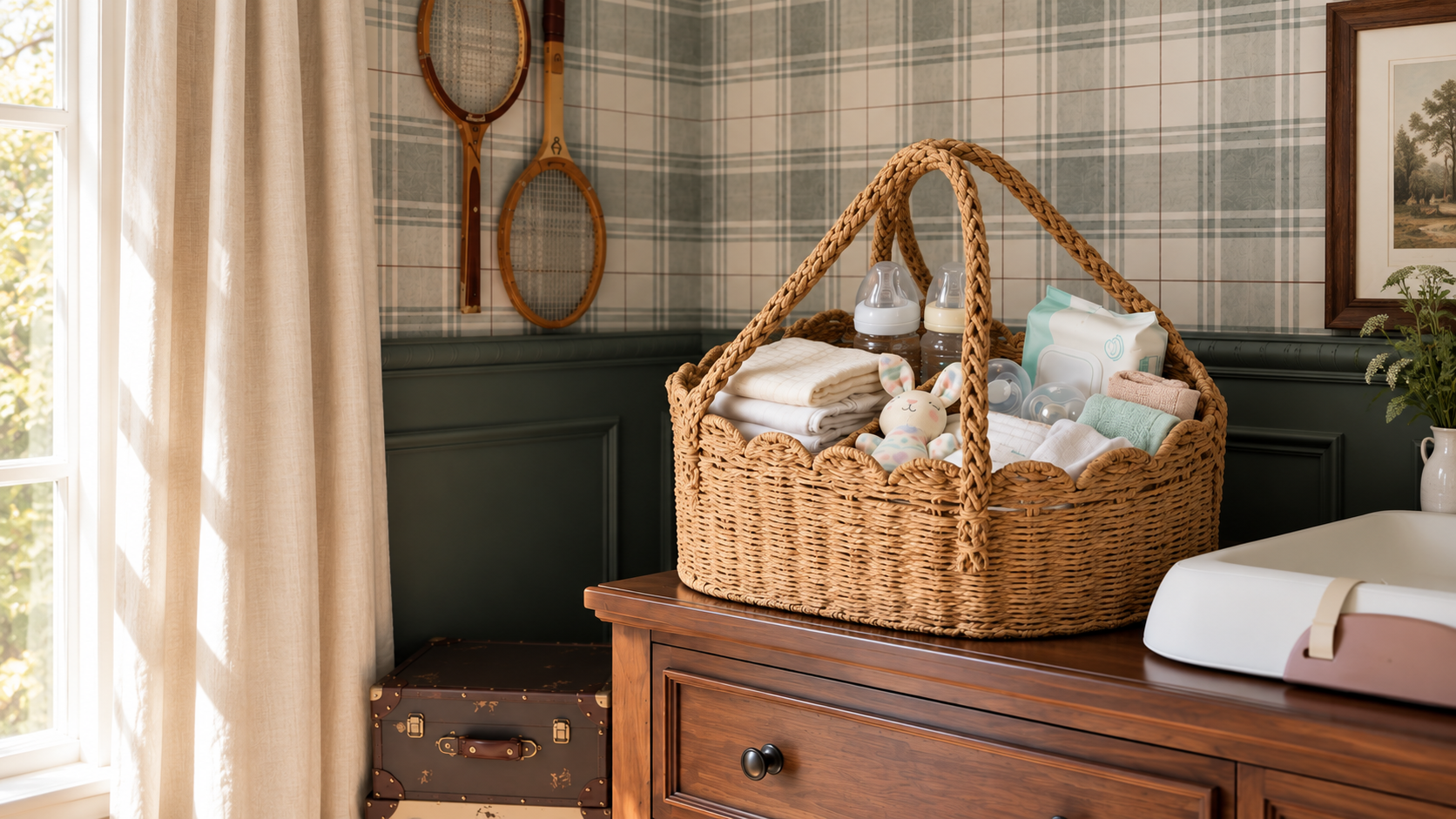
This is exactly the type of everyday item I want to look good because it is going to be out all the time. The woven diaper caddy is made in a paper-rope style and includes a removable divider, allowing diapers and small baby essentials to be separated rather than disappearing into one large basket.
I love woven storage in nurseries because it softens painted furniture and adds natural texture. More importantly, a portable caddy can move where you need it instead of forcing every diaper change to happen in one exact spot.
As a mom, that flexibility matters. The best organizing products are the ones that work with real life.
Why I chose it: Functional organization, portable storage, and a natural woven texture that fits seamlessly into the room.
Designer note: Functional objects look more elevated when their materials repeat something else in the space. Pair a woven caddy with one larger natural basket or another subtle fiber detail to create continuity.
13. Ovalo Solid Pine Nursery Book Shelves — Set of Two
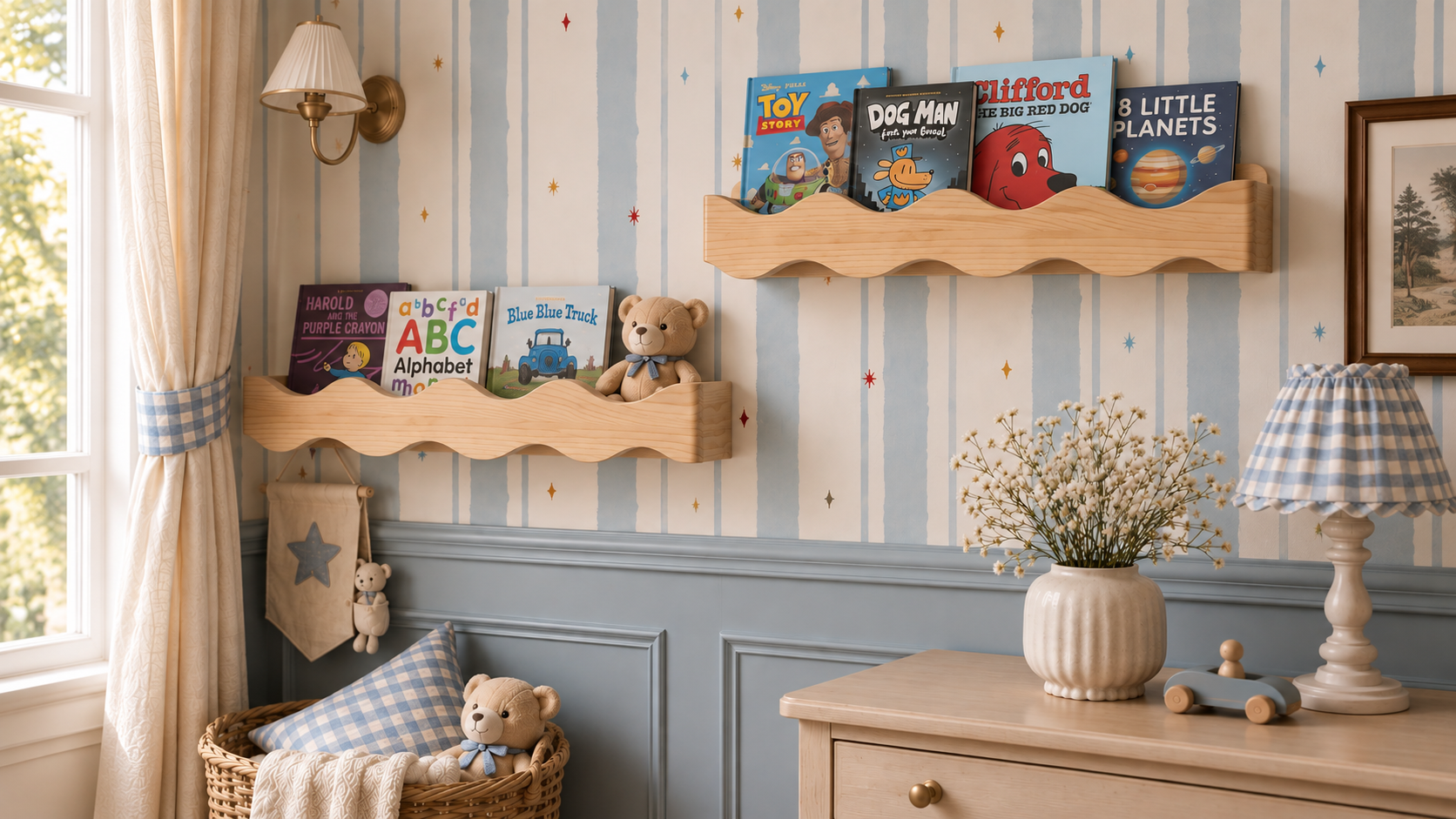
Children's books are some of the most beautiful objects in a nursery, and I would rather make them visible than hide them behind cabinet doors. The Ovalo Nursery Book Shelves are a set of two wall-mounted shelves made from solid pine wood and designed for front-facing book display.
The natural pine keeps the wall feeling warm, while the simple form lets the book covers become the artwork. Front-facing display also makes sense developmentally as children begin to recognize favorite stories by their covers.
For me, books belong in the visual identity of a child's room. I want reading to feel present and accessible, not like an activity stored away for later.
Why I chose it: Solid wood, space-saving wall storage, and an easy way to make books part of the room's design and daily routine.
Designer note: Edit the display. Five or six well-spaced covers can have more impact than filling every inch. Rotate the books as your child grows or as the seasons change.
14. Vinoil Airplane-Shaped Wooden Wall Coat Rack in Walnut
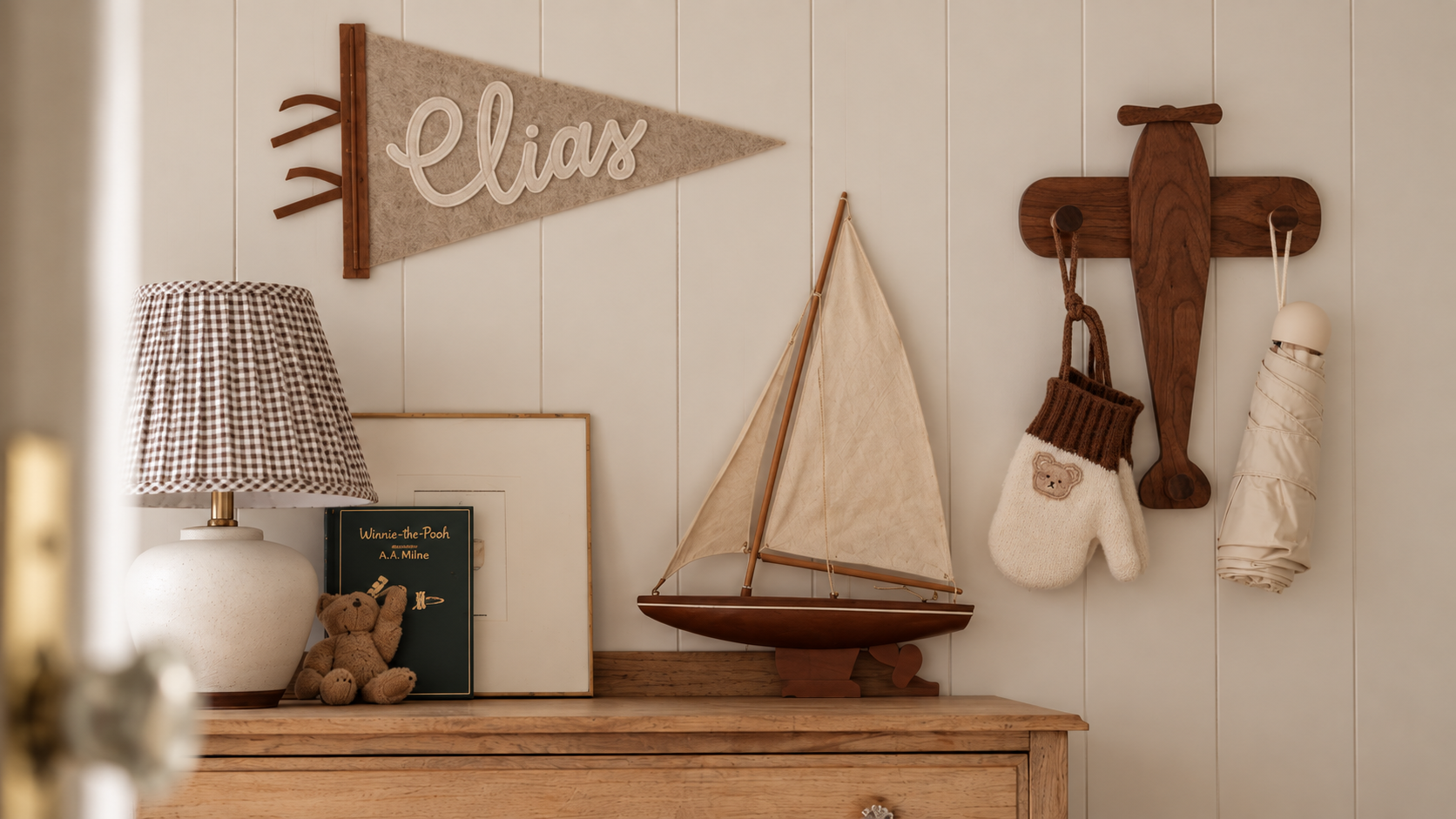
The Vinoil Kids Airplane-Shaped Wooden Wall Coat Rack is one of those details I love because it combines function with a little imagination. The walnut airplane silhouette ties visually to the crib while giving a plain wall a playful detail that still feels sophisticated.
Wall hooks become genuinely useful as children grow: jackets, small bags, hats, or dress-up pieces all need somewhere to go. I like that this solution does not require another piece of floor furniture.
The airplane motif also brings in a sense of adventure without committing the entire nursery to an aviation theme. That is exactly how I prefer to use themed details—one charming reference, not a room full of matching motifs.
Why I chose it: Useful vertical storage, warm wood, and a playful form that feels special without becoming childish.
Designer note: Treat shaped accessories as punctuation. One airplane is charming; repeating airplanes across the bedding, rug, walls, and toys would turn the room into a theme and lose the more collected feeling.
15. Rustic Bear Fabric Storage Bin
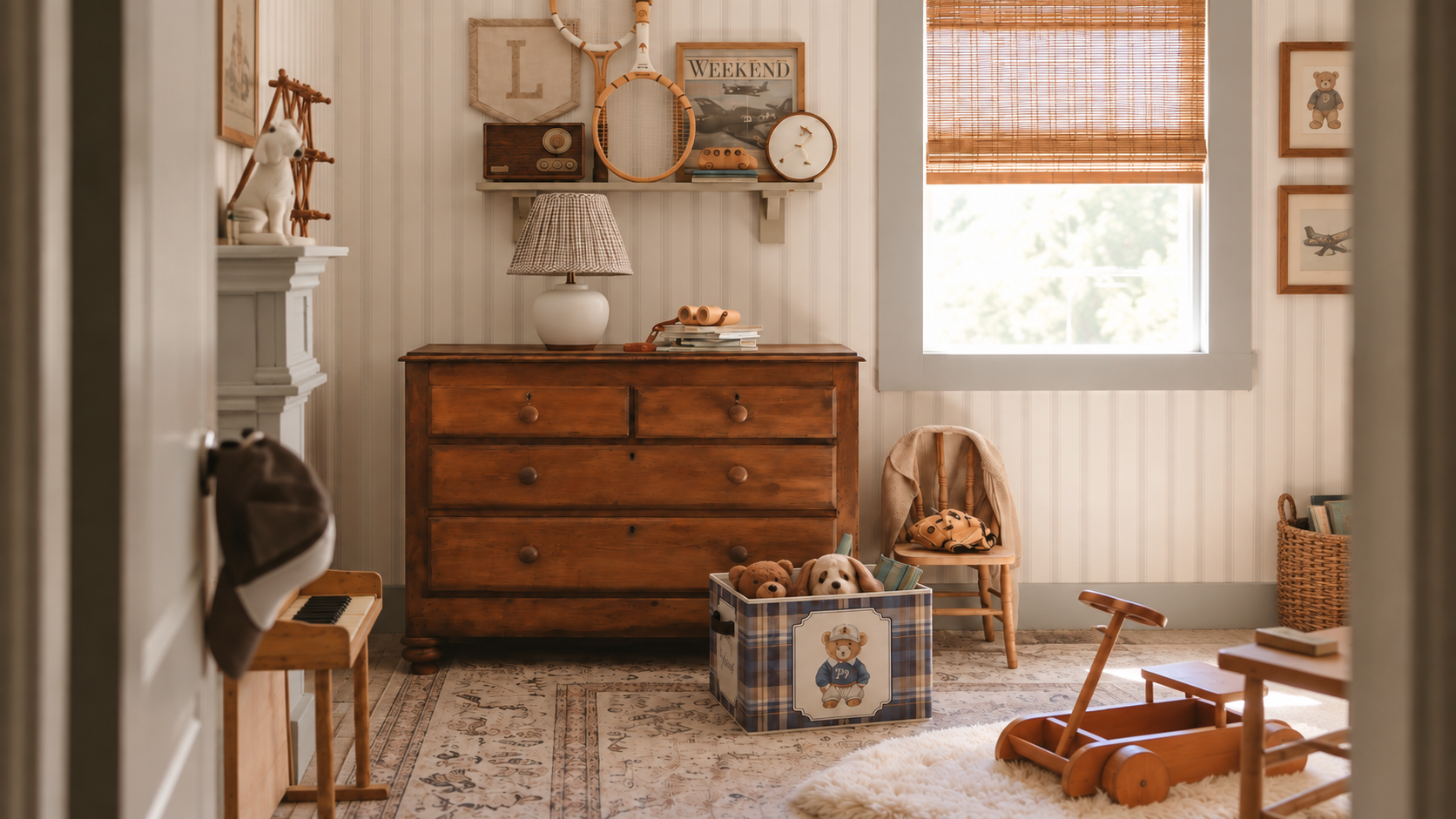
Storage is one of those nursery essentials that can easily become purely practical, but I prefer pieces that also add warmth and character to the room. This rustic bear storage bin combines soft fabric construction with a playful bear motif, making it especially fitting for a classic, boyhood-inspired nursery.
The neutral palette works beautifully alongside walnut, navy, natural wood, plaid, and vintage-inspired accessories. I also like that the bear detail feels charming without making the room overly themed, so it can sit naturally within a more elevated design.
I would use it beside the crib, near a reading corner, or next to a dresser for storing blankets, stuffed animals, books, or everyday nursery essentials. The foldable fabric construction also makes it easy to move around or store away when it is not needed.
As a designer, I like storage pieces that contribute to the visual story of the room rather than interrupt it. This one adds a softer, more playful layer that balances the tailored stripes, checks, and darker wood elements throughout the space.
Why I chose it: A practical storage solution with a warm neutral look and subtle bear detail that complements the nostalgic, classic nursery aesthetic.
Designer note: Mix soft fabric storage with harder materials like walnut furniture, woven baskets, and painted shelving. That contrast in texture keeps a neutral nursery from feeling flat while still maintaining a cohesive palette.
How I Would Put All 15 Pieces Together
When I design anything—whether it is a brand, a page, or a room—I do not want every element asking for attention at the same time. There needs to be hierarchy.
For this nursery, I would let the walnut crib, navy scallop rug, and blue-and-cream stripe wallpaper establish the room. Those are the three strongest visual decisions.
Then I would layer in the quieter elements: evergreen plaid on the crib sheet, mocha in the cotton blanket, natural pine book ledges, and the woven diaper caddy. These pieces connect the palette without competing with it.
The navy bookcase can act as a second strong color block, while the vintage bear artwork, rocking horse, airplane hooks, and personalized mallard blanket bring in the child's personality. Finally, pieces such as the sound machine and storage caddy do their practical jobs while visually belonging to the same world.
That balance is important to me. An elevated child's room should never feel like a showroom where a child is afraid to touch anything. It should invite reading, playing, resting, getting dressed, making a little mess, and growing up.
What “Elevated” Means to Me as a Mom
For me, an upscale nursery is not about buying the most expensive version of everything. It is about being selective.
I look for materials that feel appropriate for the way an item will be used, function that makes our daily routines easier, design that will not feel dated in six months, and, whenever possible, pieces that can continue to serve a child as they grow.
I also believe there is value in raising children around thoughtful design. A child does not need to know the name of a color palette or understand why two patterns work together. They simply experience a home that feels cared for. Over time, I think that teaches something quietly important: to notice quality, to value their belongings, to appreciate beauty, and to understand that a functional space can also be beautiful.
That is the kind of luxury I want for my child—not perfection, but care.
Every item does not have to be precious. Every object does not have to match. The room simply needs a point of view, good choices, and enough warmth that a child feels completely at home in it.
And to me, that is what makes a nursery truly beautiful.